
WW1 German 98/05 Bayonet (Butcher Bayonet) – 1918 – 1920 Weimar Reissue
SKU:
Added by : Mark Raynsford
Description
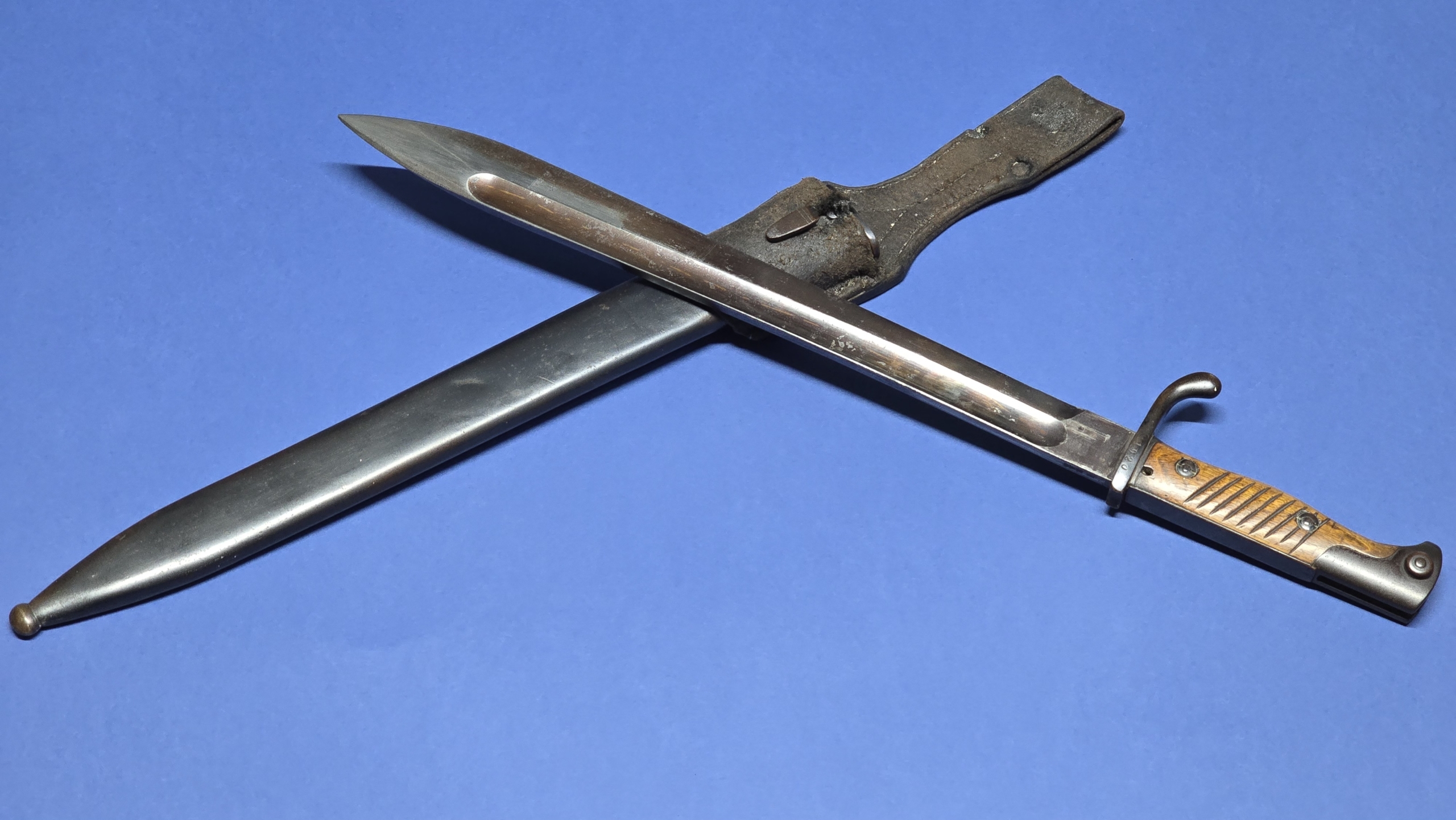
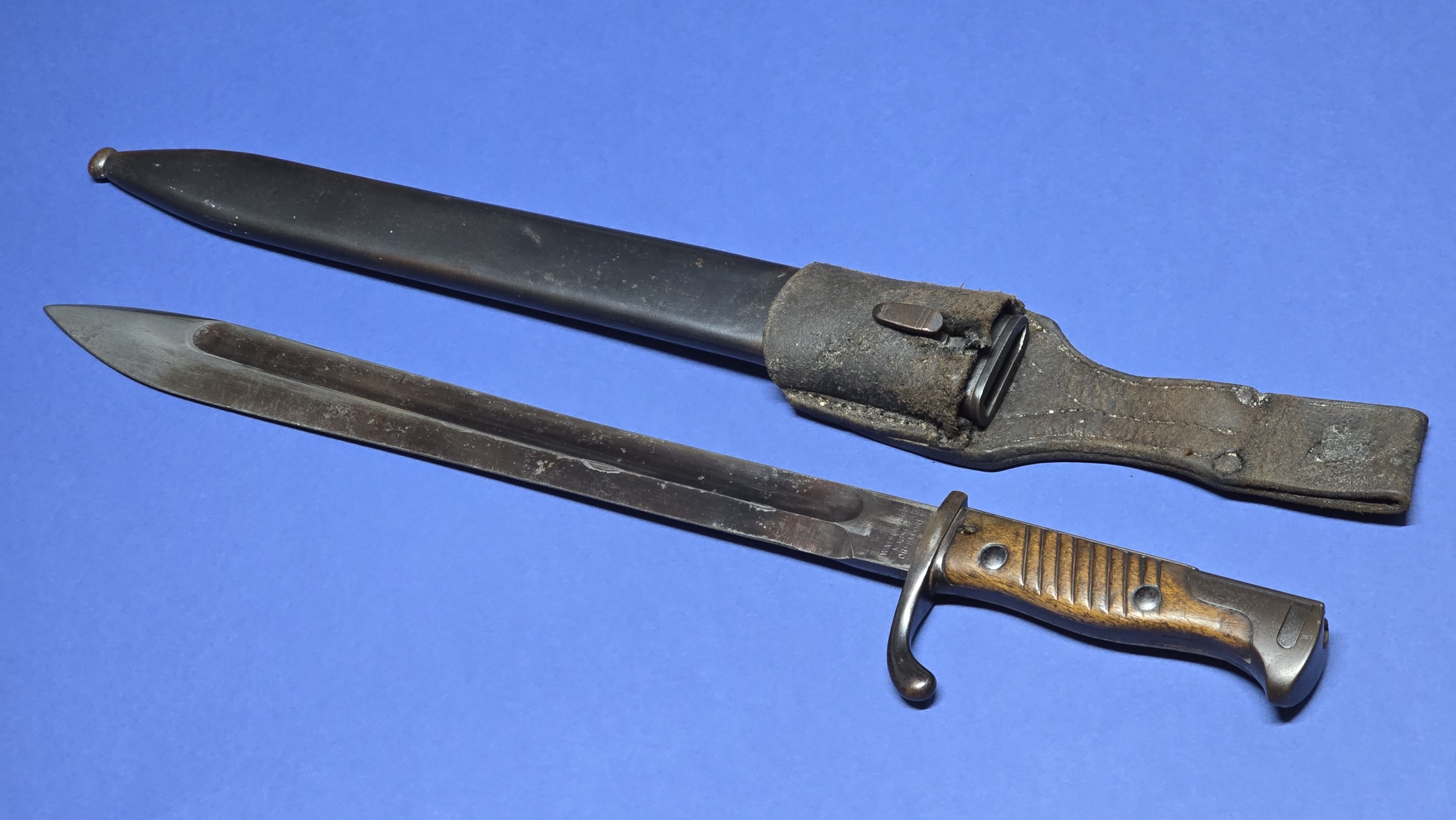
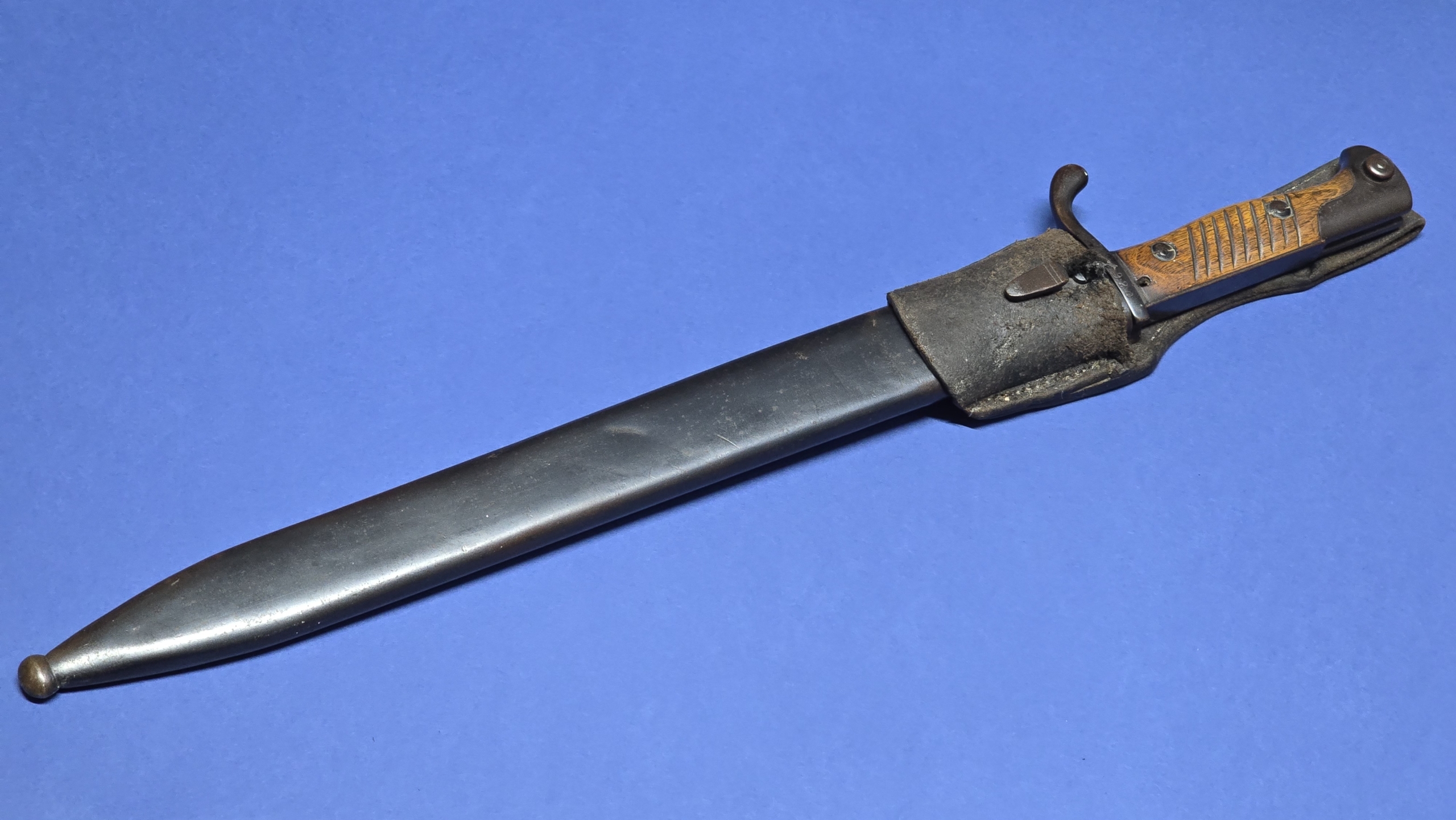
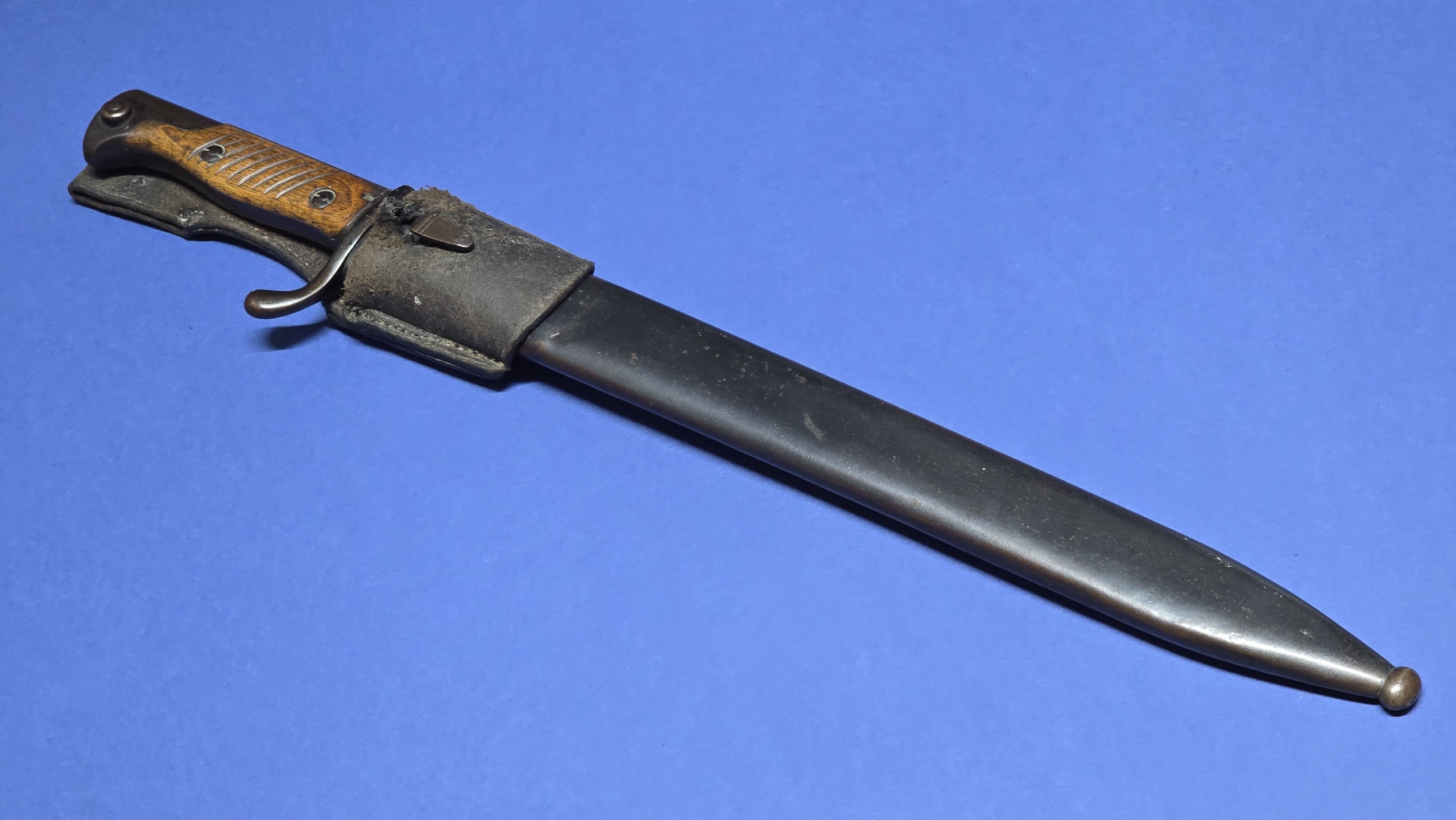
A particularly interesting example of the German 98/05 bayonet, commonly known amongst collectors as the “Butcher Bayonet.” Manufactured in 1918 by Waffenfabrik Mauser A.G., Oberndorf a/N, this example was subsequently retained for German service following the end of the First World War.
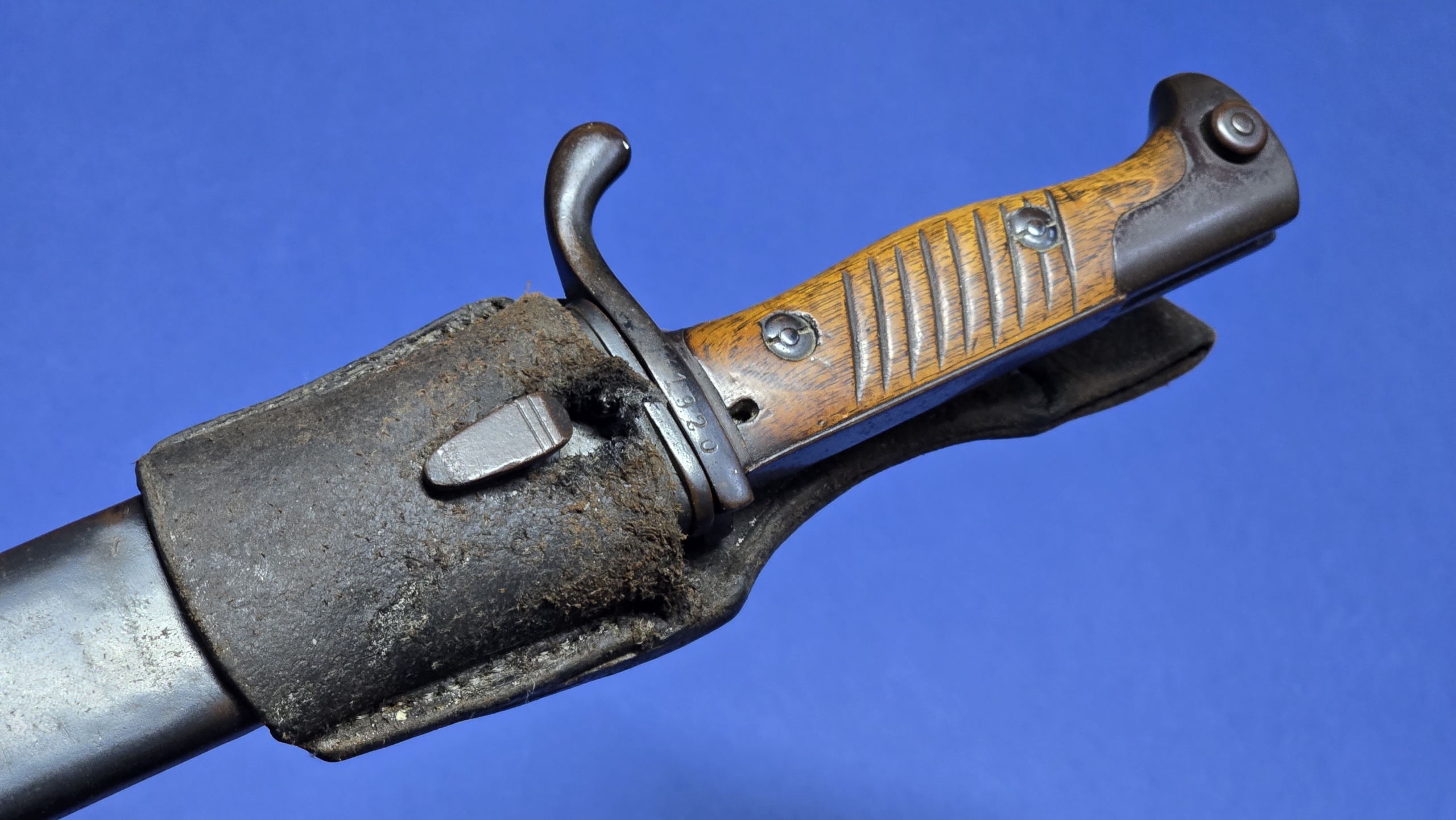
Of particular interest is the clearly struck 1920 property mark to the crossguard. Following Germany’s defeat, selected weapons from former Imperial stocks were retained for authorised service during the early Weimar period. Many of these bayonets were reconditioned before reissue, including the application of a blued finish to the metalwork.
The extensive original period bluing surviving throughout this example is therefore an important part of its post-WWI service history.
Blade
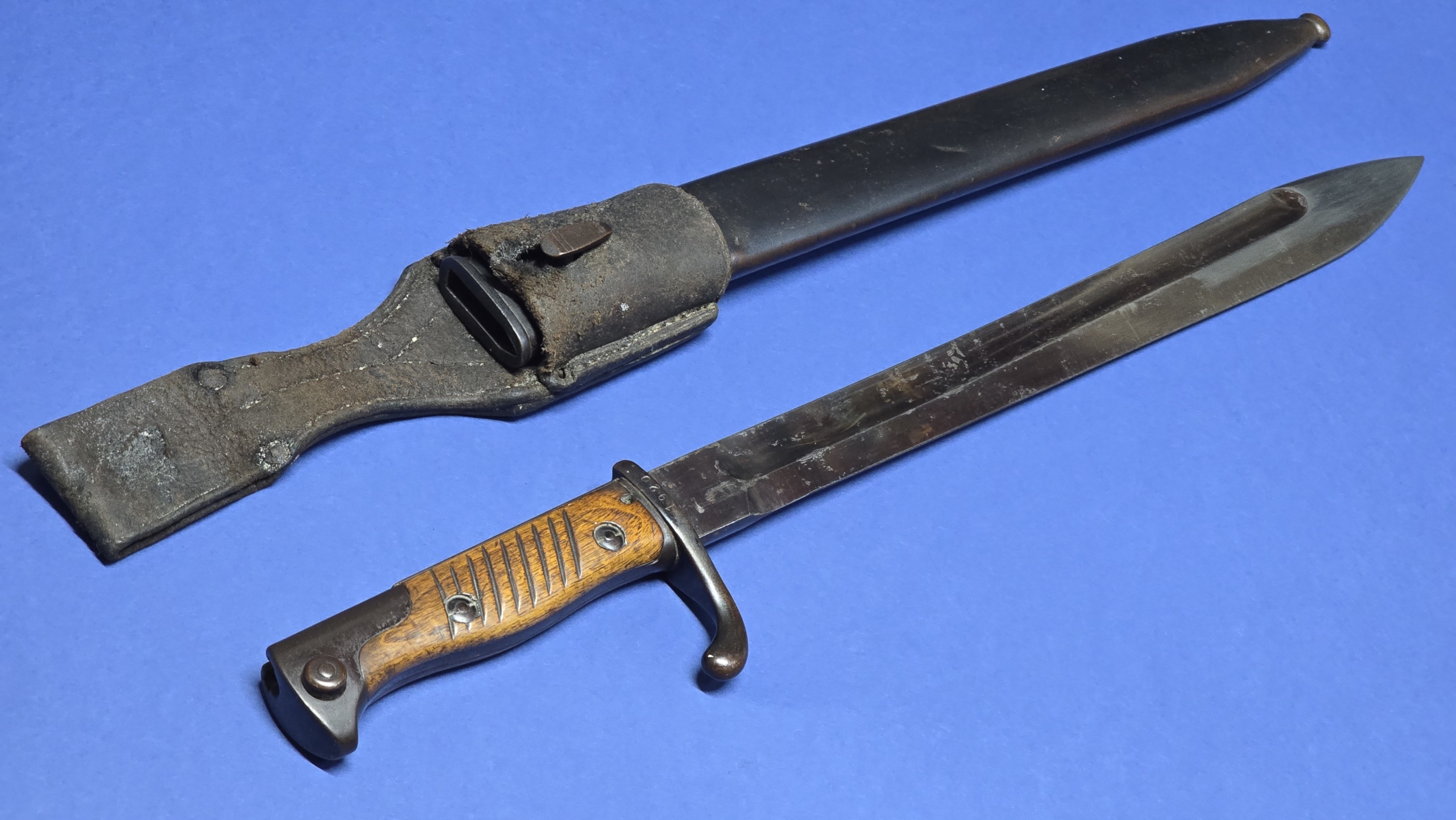
The blade retains approximately 90% of its blued finish, there are areas of age-related marking and wear together with some light pitting in places. The cutting edge appears to have received a small period sharpening. This is not a modern post-war sharpening, and the blade shows no signs of having been excessively sharpened or abused.
Overall, this remains a very good blade.
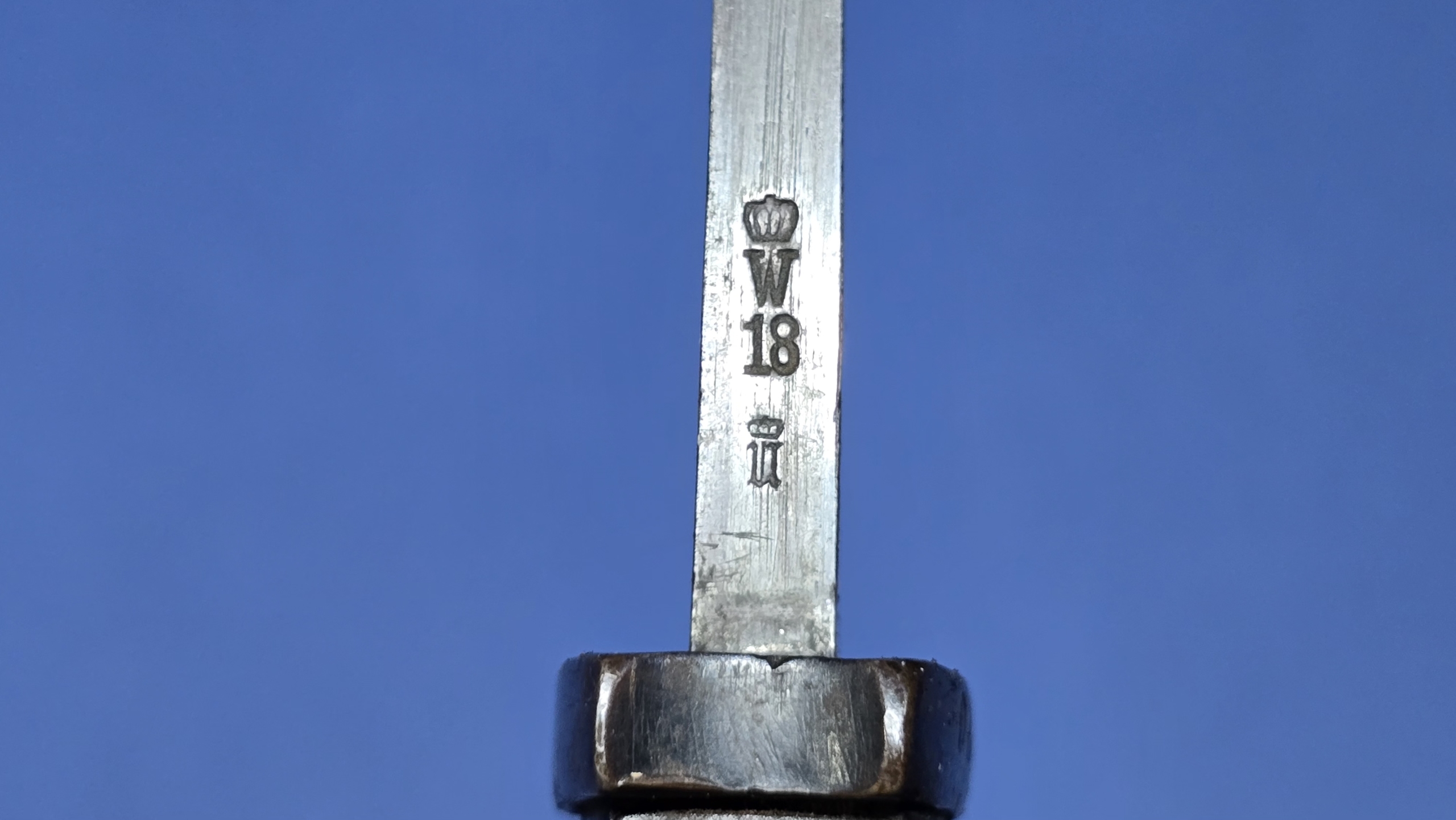
The ricasso is clearly marked WAFFENFABRIK MAUSER A.G. OBERNDORF a/N. The spine carries the Crown/W Imperial marking for Wilhelm above 18, denoting manufacture in 1918, with an additional inspection stamp beneath.
Hilt & Grips
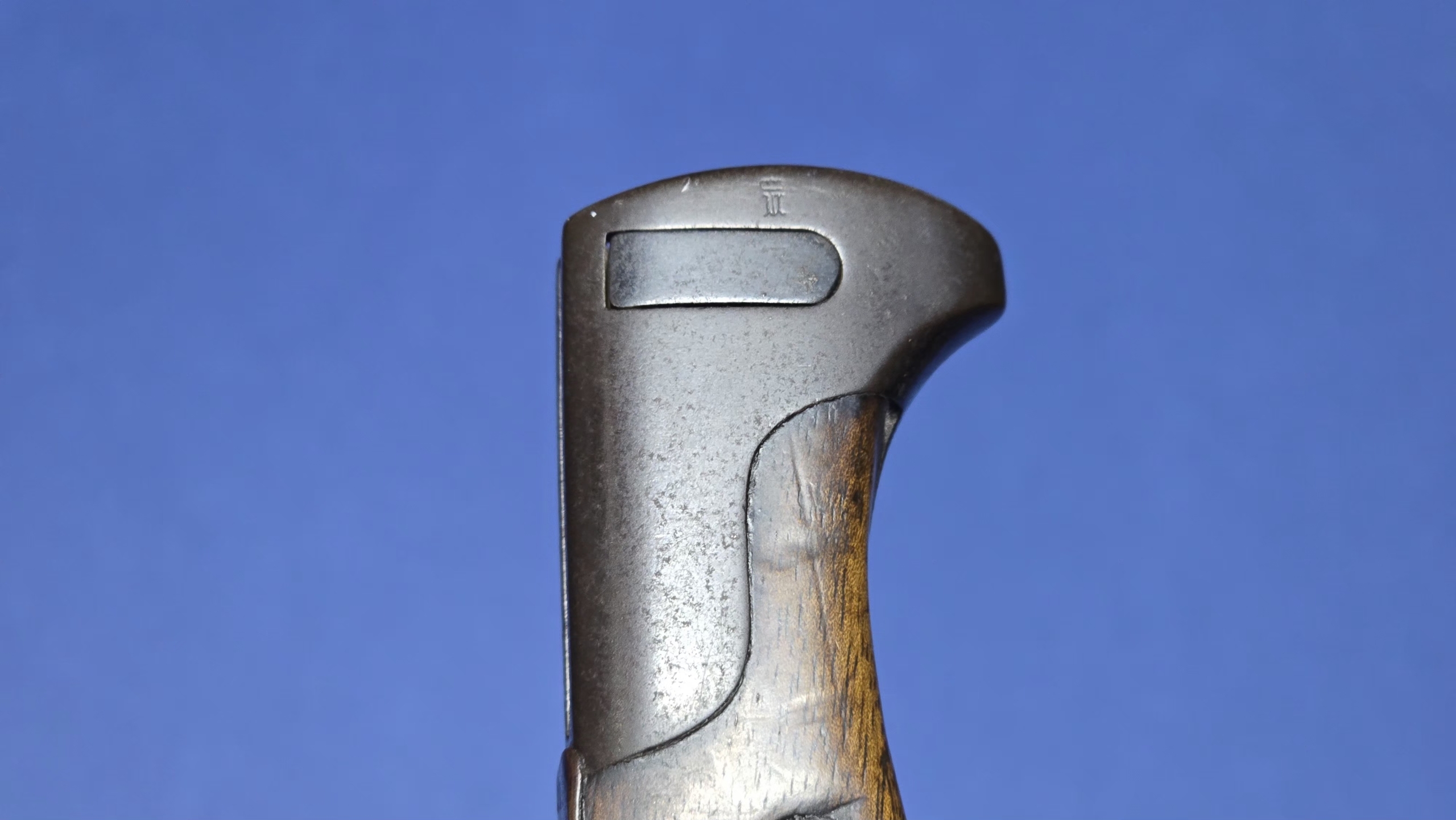
The bayonet retains particularly attractive grooved walnut grips. One side is noticeably lighter in colour than the other, something commonly encountered on original examples. Both remain in very good condition with no significant damage, and the two original grip bolts remain present. A considerable amount of blued finish survives across the crossguard, hilt and flashguard.
Most importantly, the crossguard carries the prominent 1920 property mark, identifying the bayonet’s post-WWI retention and reissue during the Weimar period.
The flashguard remains free from indentations and carries an additional inspection stamp. The rifle retaining button functions correctly, with a further inspection stamp present to the top of the hilt.
Scabbard
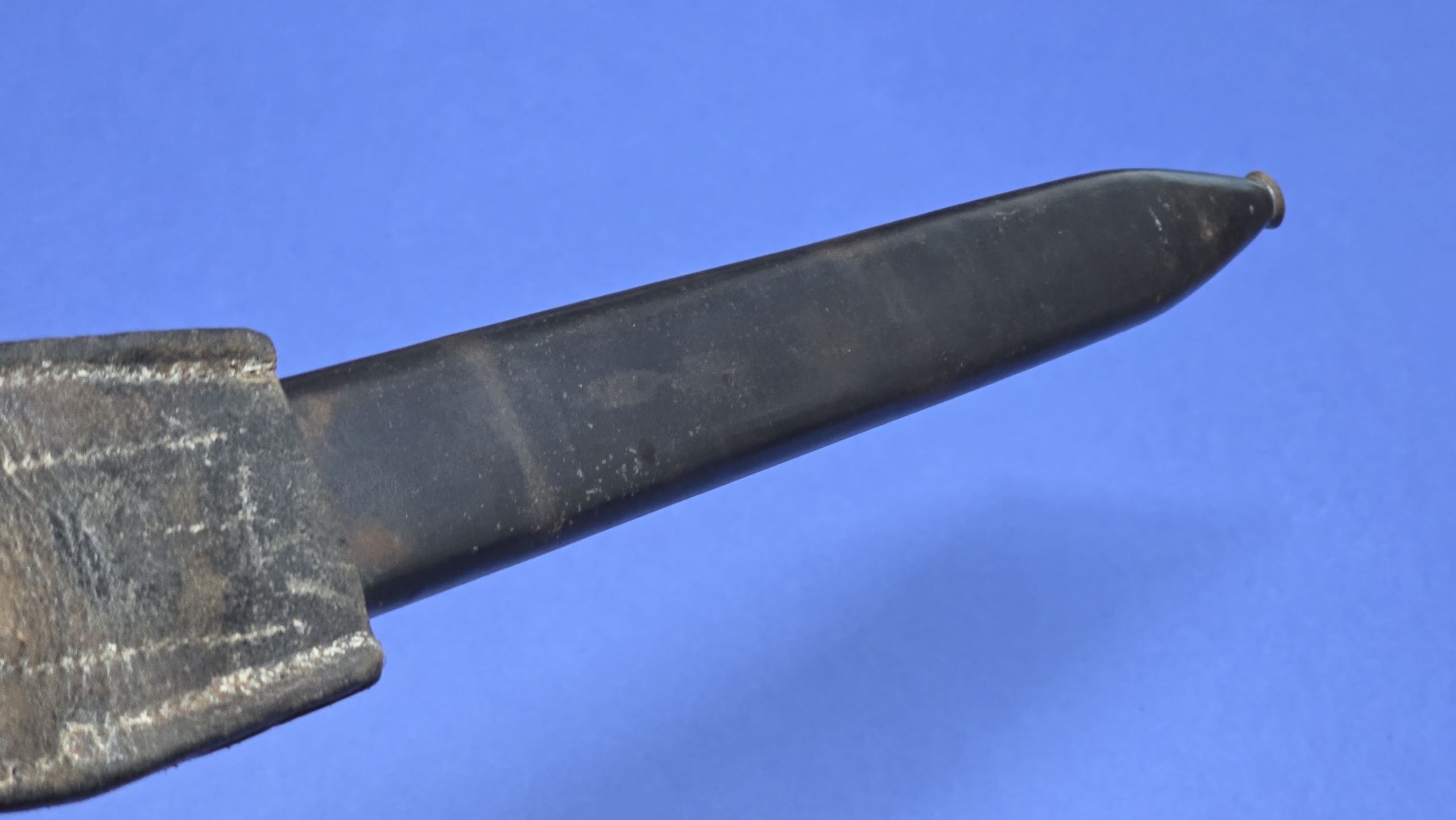
The steel scabbard is particularly well preserved and retains approximately 95% of its blued finish. An inspection stamp is present on the lower ball, and the throat screw remains correctly in place.
There is one small indentation approximately midway down the front of the scabbard, together with several extremely minor indentations which can be felt when running a finger along the surface but are difficult to notice visually.
The bayonet fits the scabbard exactly as it should, seating firmly with a positive snap.
Frog
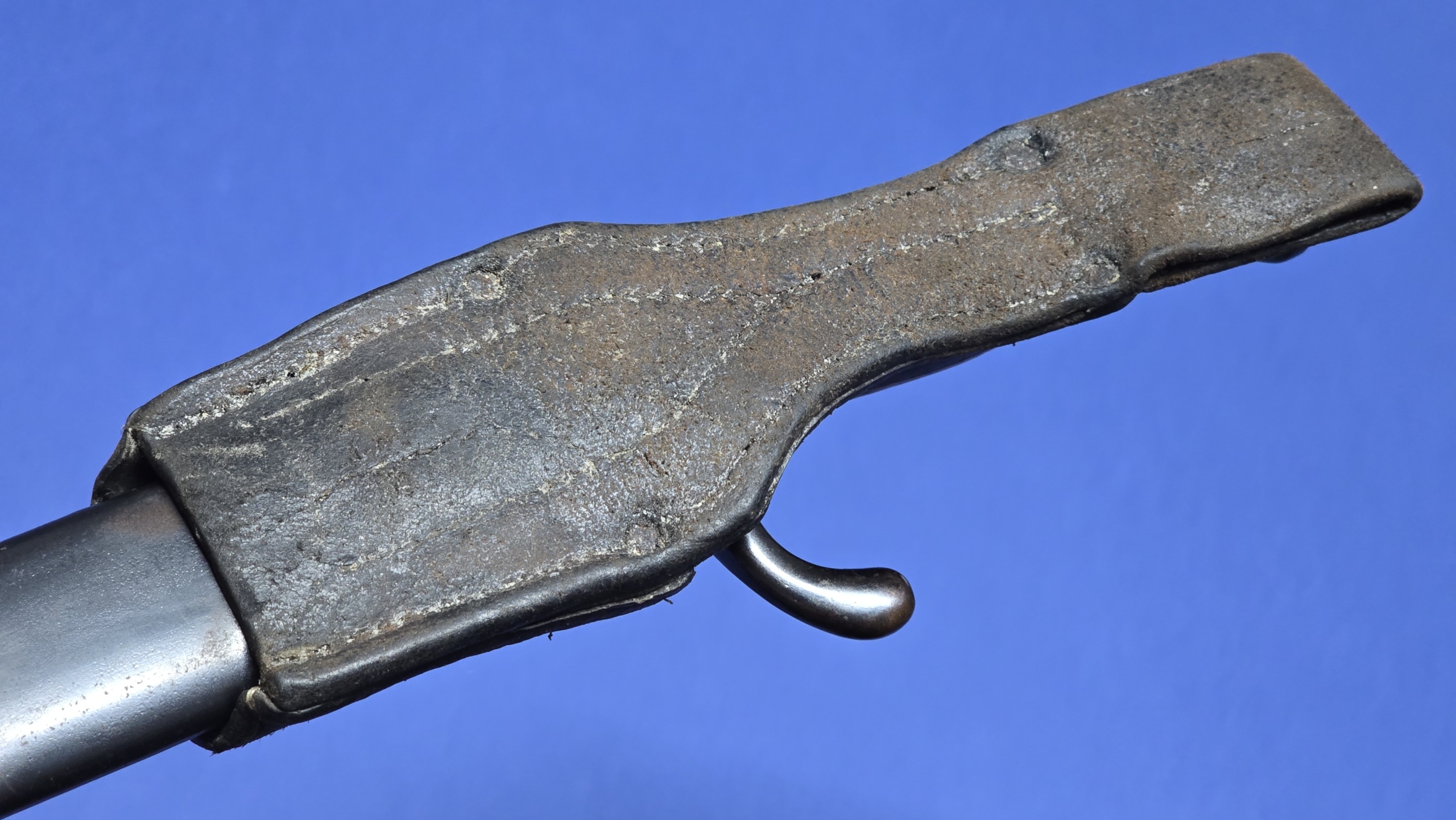
Completing the bayonet is an original wartime leather frog.
The stitching remains intact, although the leather naturally displays considerable age. The face of one rivet is missing, and there is a split to the leather immediately above the scabbard retaining-stud opening.
Despite these age-related faults, the frog retains its overall shape well and remains a good original accompaniment to the bayonet.
Overall
A particularly interesting 1918 German 98/05 retaining an unusually high percentage of its period blued finish.
The prominent 1920 crossguard marking provides tangible evidence of the bayonet’s retention for official German service following the First World War, while its reconditioned finish represents another chapter in its working life.
This is an attractive example that combines its original Imperial German manufacture with its subsequent Weimar-era history.
Historical Note
Following the First World War, the Treaty of Versailles placed severe restrictions on the size of Germany’s armed forces and the quantity of military weapons Germany was permitted to retain. Selected weapons from former Imperial stocks were therefore identified for authorised post-war service.
The prominent 1920 marking encountered on weapons from this period is generally understood as a property marking identifying arms officially retained by the new German state rather than a manufacturing date. These retained weapons could subsequently see service with the Reichswehr or German police organisations.
Many retained 98/05 bayonets were reconditioned before being returned to service, including the application of blued finishes to metal components. This accounts for surviving examples displaying substantially more bluing than would normally be expected on an Imperial-period 98/05 in its original First World War configuration.
This particular bayonet therefore tells an interesting two-period story: manufactured by Waffenfabrik Mauser A.G. in 1918 for Imperial Germany, before being retained, reconditioned and marked 1920 for continued service during the Weimar period.
We ship to the USA, Europe, and most worldwide destinations.
All items are carefully packed for safe transit.
£265.00