
Welcome to The Vault Militaria
Welcome to
The Vault Militaria
Authentic pieces. Timeless stories. Exceptional service.
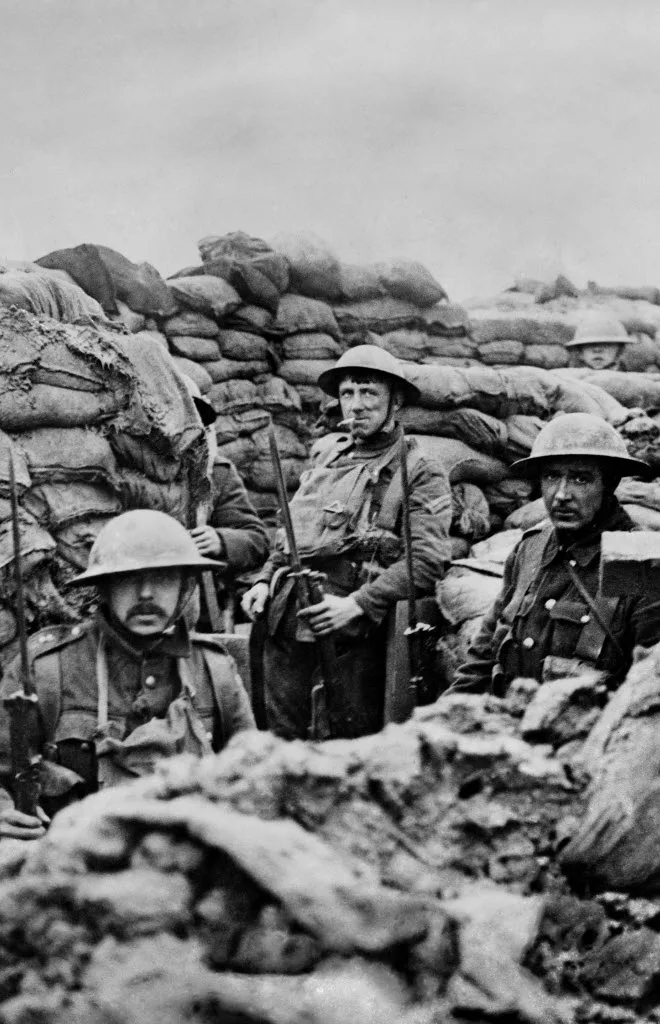
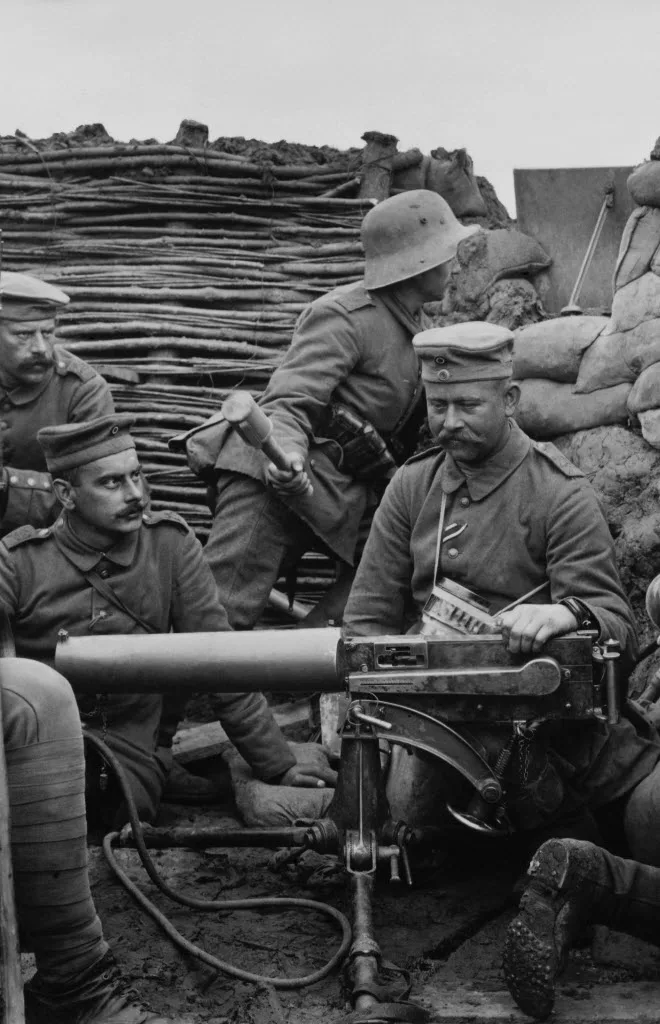
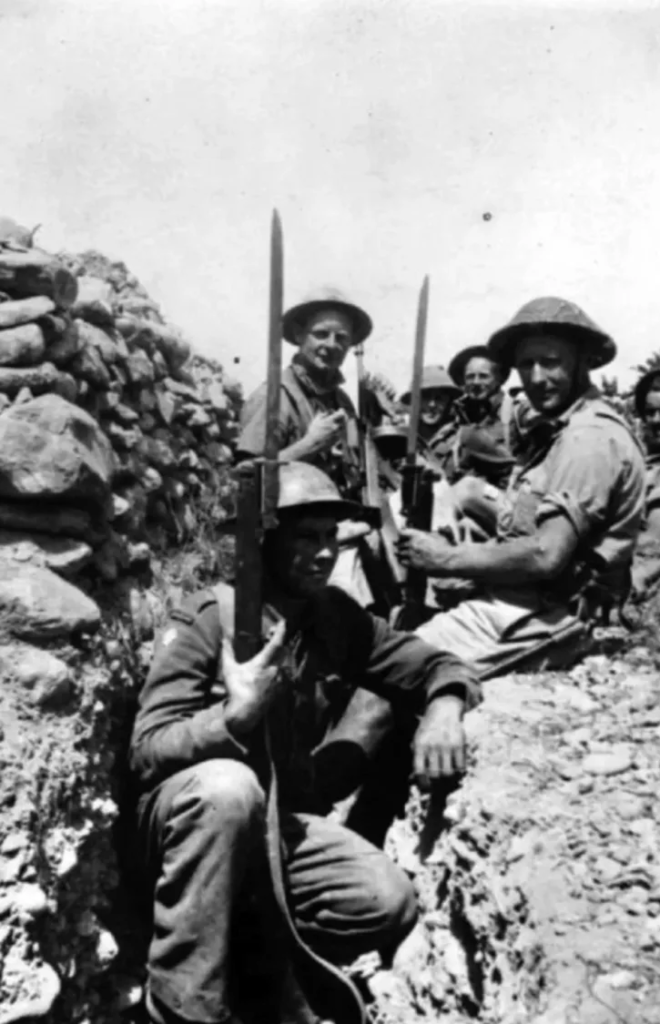
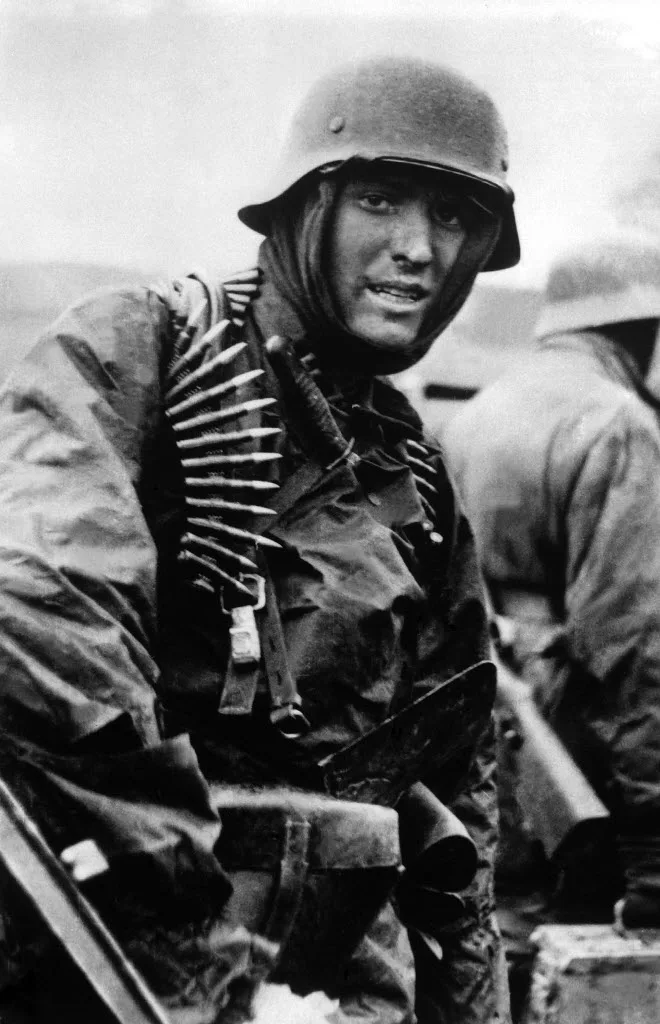
The Vault Militaria is the UK’s newest destination for authentic wartime memorabilia and collectables. Specialising in rare and hard-to-find items from World War I and World War II, we offer history enthusiasts and collectors a carefully curated selection of genuine artefacts.

new items every week
Rare finds
Our team of experts meticulously sources, authenticates, and catalogues each piece, ensuring that you receive only the finest quality items with verified provenance. And we’re adding more and more items on a regular basis.
From battle-worn uniforms and medals to vintage weapons, field equipment, and personal effects, The Vault Militaria brings you closer to the tangible remnants of wartime history.
knowledge & experience
We buy & sell
The founders of The Vault Militaria bring over 50 years of combined collecting experience to the table. They have a pair of keen eyes for the unusual together with an extensive knowledge of wartime collectables to ensure that every item offered is both authentic and exceptional.
With decades spent honing their expertise, they’ve developed an unparalleled ability to source and validate rare military artifacts, making The Vault Militaria a trusted name in the field.
Contact Mark on 07471 058445 or Andrew on 07944 609319
Contact Mark on 07471 058445
or Andrew on 07944 609319
Browse our latest items
-
WW1 German 98/05 Bayonet (rare double marker marked)
£235.00 SKU: 0179MThis German 98/05 (butcher) bayonet is double maker-marked, a feature not often seen, making it a rare and desirable find. There are several possible reasons why a bayonet would bear two maker marks. The most likely explanation is that some manufacturers sourced parts from other makers, leading to double stamping. The blade is bright and in good condition, with a proof stamp on the spine. The front ricasso displays the "J.A. Henckels" manufacturer's logo, while the reverse side is marked "Act. Ges. Vorm Frister & Rossmann Berlin". This is a very rare combination of makers, and only the second example we've seen in over 10 years. The wooden grip plates show wear but remain in good condition, secured by two screw bolts. The rifle-retaining button is functional, and a proof stamp can be found on the upper pommel. A layer of rust covers the cross guard, flash guard, and hilt, but fortunately, it is not deep pitting. The metal scabbard, which also has an even surface rust matching the fittings on the handle, features a proof stamp on the throat. while the frog is not the correct type, it was found this way, and we prefer to pass on items exactly as we receive them. -
British 1907 Pattern Bayonet (SMLE)
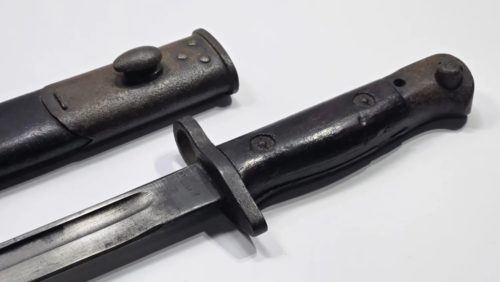
£120.00 SKU: 0176MThe 1907 bayonet was designed to be used with the short magazine Lee Enfield (SMLE) rifle. This particular pattern 1907 bayonet has the hook quillon removed, a modification officially approved on October 29th, 1913. The dark brown wooden grips are in good condition, showing minimal wear and held in place by two screw bolts. The upper hilt features a functional spring loaded rifle catch but does show pitting to the metal. The blade measures 17inches, has been neatly sharpened and is overall in good condition, with only some small patches of surface rust in places. The blade has markings on both sides of the ricasso, including "1907" and makers name "Sanderson". The leather scabbard is in good condition with all its stitching intact. Both scabbard fittings show heavy pitting to the metal but are undented and have the original staples present. The blade fits the scabbard perfectly. -
K98 Cleaning Kit
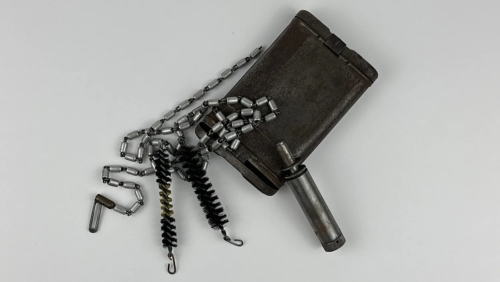
£120.00 SKU: 0048AThis cleaning kit, dated 1940 is for the German K98 Rifle. The Reinigungsgerät 34/ RG 34 or translated to English; Cleaning Kit 34, comes complete with original steel oil bottle, a pull-through chain, a cleaning and an oiling brush. Sadly, the takedown tool is missing from this kit. It opens at both ends via a hinge and retaining clip mechanism. All of this is contained in a steel container than would’ve been held on a German soldier’s person. This one has some light dents all over, but the hinges work flawlessly, holding the contents securely and tightly. These kits can be difficult to find dated, with all components included. Additionally, the condition of the oil bottle speaks volumes because most of them are a lot more tarnished than this one. Later versions of this kit did away with steel bottles and replaced them with light weight Bakelite versions. -
CC41 Britannia Stockings
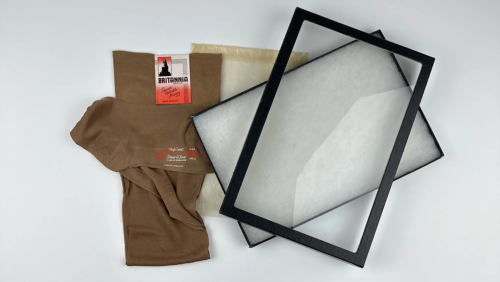
£30.00 SKU: 0047AThe CC41 Utility logo was an identifying mark of products produced and sold as part of the British Government's WW2 Utility Clothing Scheme. The CC41 mark indicated that the item met the standards of the Government's Utility regulations, and could be sold as a product of the Utility Scheme. These stockings come in a lovely display box, backed with a soft wadding. The ‘window’ on the front of the display box is GLASS, not plastic and the lid is held in with four pins. They still have the original label AND original paper bag they came in. They’re in brand new condition, with no damage, plus the markings are clearly readable and visible. -
Bombed London Book
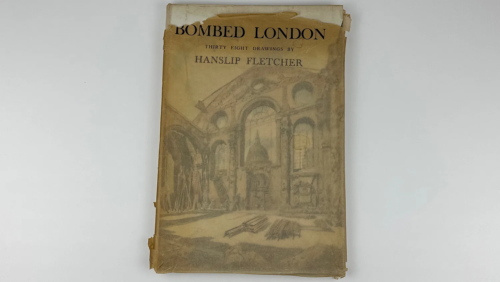
£40.00 SKU: 0046AThis book, by Hanslip Fletcher and printed in England by West Brothers in Mitcham, is quite a large book, with illustrations mainly in black and white, with two in colour. Each illustration has a title, and also some text to go with it giving some further details. Typically, they tend to be of historic of noteworthy buildings damaged during WW2. The first and second editions of this book were published in 1947 and 1948 respectively. This book comes complete with original cover of course, BUT, it also has the original sleeve. Made of a kind of paper that’s similar to greaseproof paper, it’s obviously seen better days. But finding these books with the covers intact is very difficult now. The book inside is in good condition, no pages have been dog-eared and no pages are missing. The corners of the book are a little worn however. As stated, finding these books with original paper sleeves is VERY hard now, and to find one in this condition makes this book noteworthy, and an excellent addition to your collection. -
WW1 German S. 84/98 Bayonet (sawback)
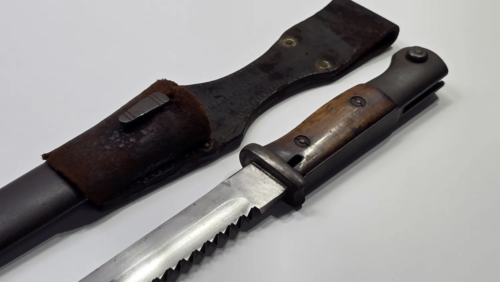
£395.00 SKU: 0175MThe German sawback bayonet would account for only 6% of the total production of these bayonets, making them scarce and very sought-after by collectors. The example shown here features an excellent blade with 19 sharp sawback teeth, the correct amount for this model. The maker's mark on the blade, while partially worn, identifies the manufacturer as "Franz Koeller & Cie-Ohligs." This company produced these bayonets from 1915 to 1917. The wooden grip plates remain undamaged, displaying an attractive colour and secured by two screw bolts. The upper pommel features a functional rifle retaining button and bears a proof stamp. The scabbard is in good condition, with no indentations or damage. The scabbard and metal fittings do show an even surface rust typical of age, but no heavy pitting. The frog has all its stitching and rivets in place, but the leather does show a lot of wear to the front. I believe this frog has lived with this bayonet for the longest time, as there is a small piece of leather missing from the front of the frog and you can see that the metal as aged around it. I personally enjoy seeing this type of wear and believe it adds to the history of the piece. -
British 1907 Lee Enfield Bayonet
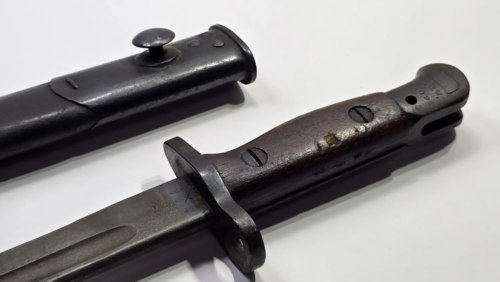
£220.00 SKU: 0174MThe 1907 bayonet was designed to be used with the short magazine Lee Enfield (SMLE) rifle. This particular pattern 1907 bayonet has the hook quillon removed, A modification officially approved on October 29th, 1913. This example is in excellent condition, retaining most of its original blueing. The wooden grips are held in place by two screw bolts and show minimal wear. The upper hilt features a functional spring loaded rifle catch, with markings are present, including "1.D.W" "409". The number "409" is also marked on the throat of the scabbard. Earlier versions of these bayonets had hooked quillons, designed to catch and trap an enemy's bayonet. This feature was later deemed impractical and replaced with a more simplified design, as seen here. The blade measures 17inches, has been neatly sharpened and is in good condition with lots of markings on the ricasso, including makers name "Sanderson". The scabbard is in great shape with all its stitching intact and free of any indentations in the leather. There are some markings on the leather, but its very faint and I'm unable to read them. A very nice 1907 bayonet. -
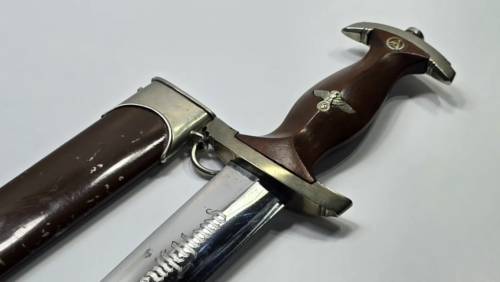
WW2 Early SA Dress Dagger (Anton Wingen J.R.)
£725.00 SKU: 0171MThis early S.A. dagger was produced by the renowned German knife-making company, Anton Wingen J.R., who gained prominence during World War 1 for designing hunting and combat knives for the German troops. The blade is clean and bright with some cross-graining still visible. While there are the usual runner marks and light wear, it still remains in good condition and better than most. The grip is an attractive dark wood, in excellent condition, with a nickle silver eagle inlaid perfectly in the centre. The S.A. rune is in good condition but unfortunately not inlaid as flush as it could be. All fittings are made of nickle silver and are in good condition. The bottom crossguard is "gau" marked "He," indicating its original issue location in Hessen. The scabbard fittings are also nickle silver and match the colour of the crossguard fittings. The scabbard shell is painted brown, rather than anodised like we often see on early S.A. daggers. This is likely due to the start of the transitional period of changes being made to the materials used, due to the increasing demand for S.A. daggers, as the Nazi party gained power. Please note that there is one missing screw from the top scabbard fitting, which has been factored into the pricing. The blade fits the scabbard perfectly.