Vault Militaria Home2024-11-08T12:40:21+00:00

Welcome to The Vault Militaria

Welcome to
The Vault Militaria

Authentic pieces. Timeless stories. Exceptional service.
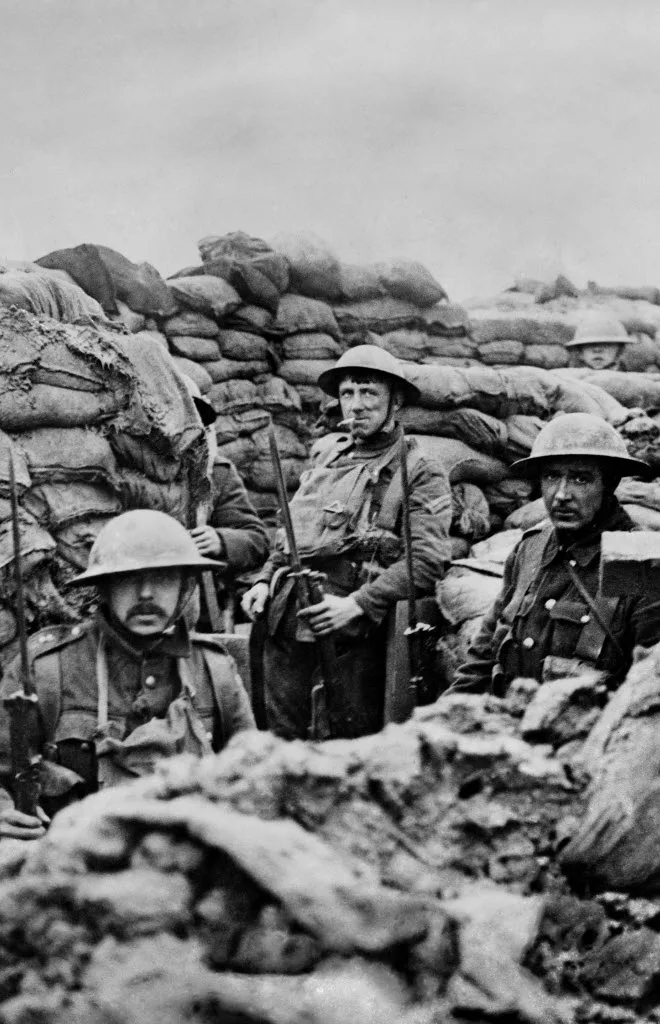
The Vault Militaria is the UK’s newest destination for authentic wartime memorabilia and collectables. Specialising in rare and hard-to-find items from World War I and World War II, we offer history enthusiasts and collectors a carefully curated selection of genuine artefacts.

new items every week

Rare finds

Our team of experts meticulously sources, authenticates, and catalogues each piece, ensuring that you receive only the finest quality items with verified provenance. And we’re adding more and more items on a regular basis.

From battle-worn uniforms and medals to vintage weapons, field equipment, and personal effects, The Vault Militaria brings you closer to the tangible remnants of wartime history.

knowledge & experience

We buy & sell

The founders of The Vault Militaria bring over 50 years of combined collecting experience to the table. They have a pair of keen eyes for the unusual together with an extensive knowledge of wartime collectables to ensure that every item offered is both authentic and exceptional.

With decades spent honing their expertise, they’ve developed an unparalleled ability to source and validate rare military artifacts, making The Vault Militaria a trusted name in the field.

Contact Mark on 07471 058445 or Andrew on 07944 609319

Contact Mark on 07471 058445
or Andrew on 07944 609319

latest additions

Browse our latest items

  • Boer War Chocolate Tin

    £135.00 SKU: 0004A
    The Boer War, also known as the Anglo-Boer War or the South African War, was fought between the British Empire and the two independent Boer republics, the South African Republic (Transvaal Republic) and the Orange Free State, from 1899 to 1902. During this time, decorative tins containing a ‘taste of home’ were sent as part of care packages to British troops. While the primary purpose of these tins was to hold chocolate bars, they also served a practical function. The tins were durable and reusable, providing soldiers with a convenient container for storing personal belongings or rations while in the field. This tin here contains the original liner and the area on it where the seal was originally broken is clearly visible. There are areas where the base metal is showing through however the underside of the lid is showing the least amount of wear which is often an area that shows a lot of wear. The hinge is not only present but works flawlessly and the tin opens and closes perfectly and it even still snaps shut properly. It’s VERY rare to find one with all the original accoutrements present.
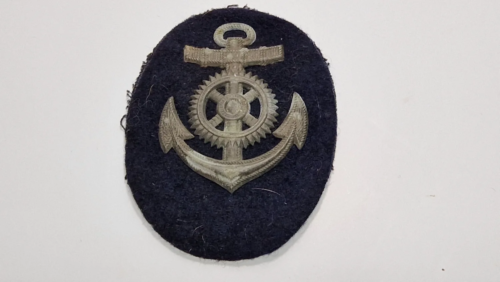
  • This is a Kriegsmarine machinist's trade badge, typically worn on the sleeve and indicated the wearer's specialization in machinery and mechanical work. The badge does shoe age to the metal but overall in good condition.
  • Here we have a fine set of German deluxe army officers straps in superb condition. There are many variations of army officers straps all with minor differences. What tells us this is a deluxe set is the detailed oak leaf clips and buckles. Both clips and buckles are Assman marked which is a nice touch, as not all sets are. Also, there still remains some frosting to the metal, which gives us an idea of how they would of left the factory. We don't get to see much frosting on items from this time period as handling the items over the years tends to wear it off. All stitching to the front of the straps, including the felt back is intact and in great condition. A great set of straps to complete a nice army officers dagger.
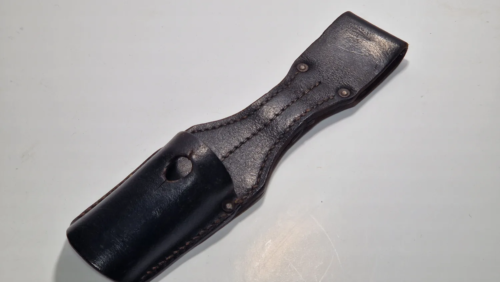
  • Here we have a superb condition K98 frog which is dated 1941 and maker marked. All stitching and rivets are intact and secure. The leather is supple and strong and has retained a good shape. There is no shortage of poor condition K98 frogs, but finding them with the leather in good condition has become a challenge.
  • Here we have a Seefahrt 1st Not (Shipping is Necessary) tinnie from 1935. This pieces were constructed by being die struck and made with an aluminium base, then silver washed and lacquered. The front depicts a sailing ship breaking the waves, below an NSDAP national  eagle (clutching a wreathed swastika). On the outsides of the badge it reads "Tag Der Deutschen Seefahr 25, 26, 5 1935" (day of the seafarers). on the reverse we have a horizontal tombak pin and a makers mark. The pin is in good working order. Great little item in very nice condition.
  • This is an RLB aviation donation pin. It is constructed from a die stamped steel base and painted black. The oval shaped front features a plane flying above a house that has the 1st pattern RLB logo on it. The outside of the badge reads (Luftschutz Tut Not) which translates to "Aviation is Necessary". The reverse of the badge is hollow and has a soldered steel pin that's in working order. This badge is very interesting and in great condition showing a lot of detail.
  • This is a nice early example of the German War Merit Cross with swords. These medals were made from zinc with a bronzed wash. The early models like this kept their bronze wash but as the war progressed, the quality of the materials decreased and as a result late war crosses lose their bronze wash and end up yielding a grey appearance. The award had Four Variants with swords, this one being the 2nd class. The 2nd class cross with swords was presented to military personnel for bravery. This example has kept its bronze wash and is in very good condition.
  • Here we have a nice early version of the bronze West Wall Medal with original ribbon. The inscription on the rear of the medal reads "Fur Arbeit Zum Schutze Deutsh Lands" (for work to protect the land) surrounded by a oak leaf wreath. On the front on the medal we see a pill box surmounted by a crossed sword and spade with a detailed eagle and swastika at the top. The West Wall Medal was handed out to the designers, planners and over 600,000 workers who constructed the Siegfried Line and other fortifications along the western border of Germany. A very nice early example.      


Go to Top