Welcome to The Vault Militaria
Welcome to
The Vault Militaria
Authentic pieces. Timeless stories. Exceptional service.
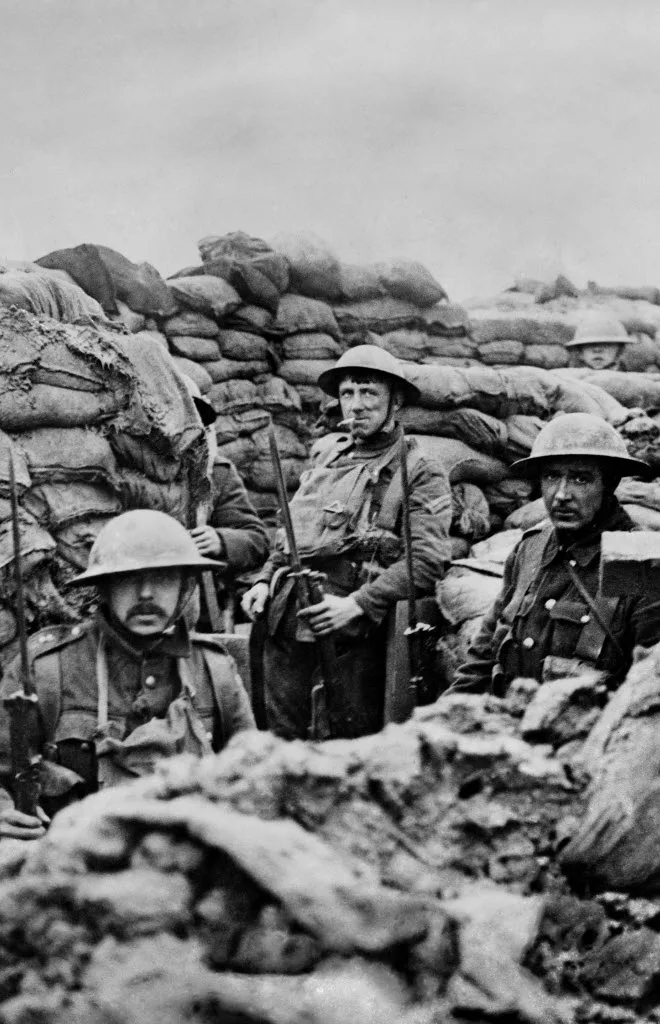
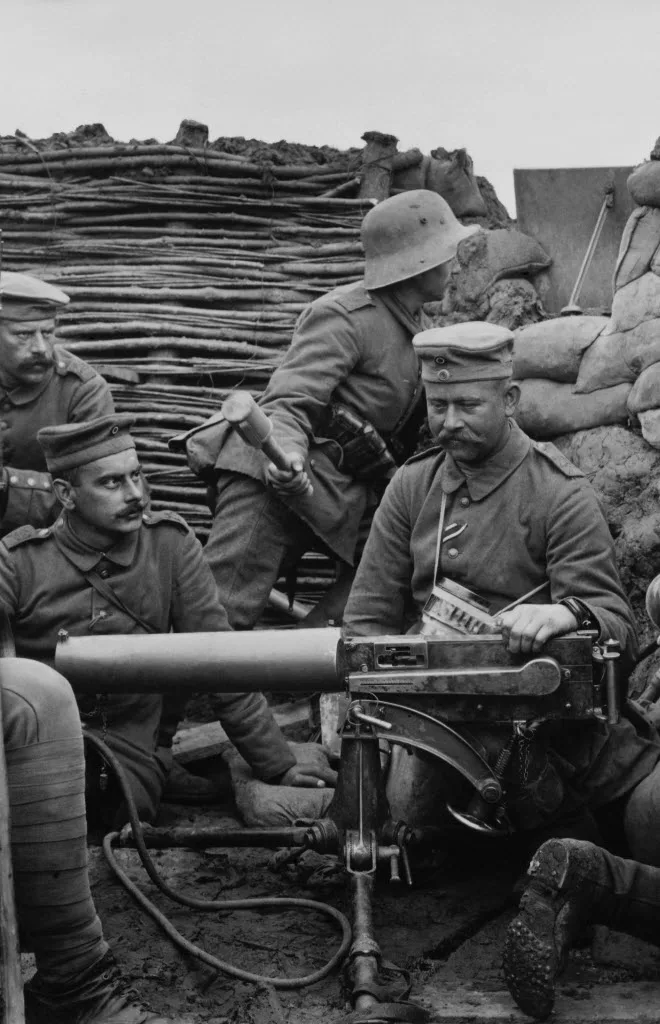
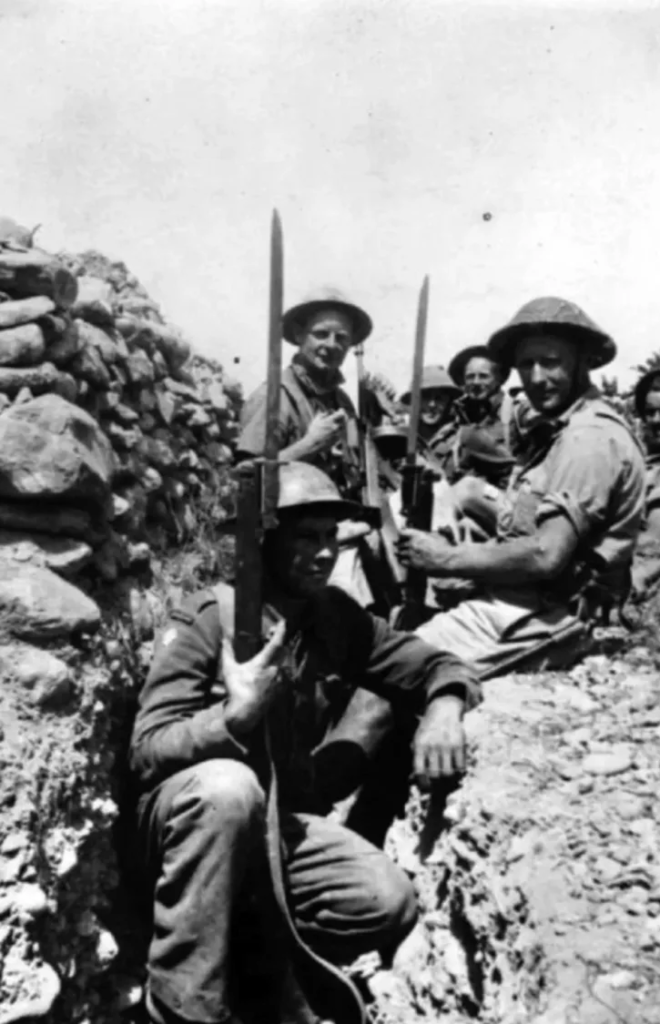
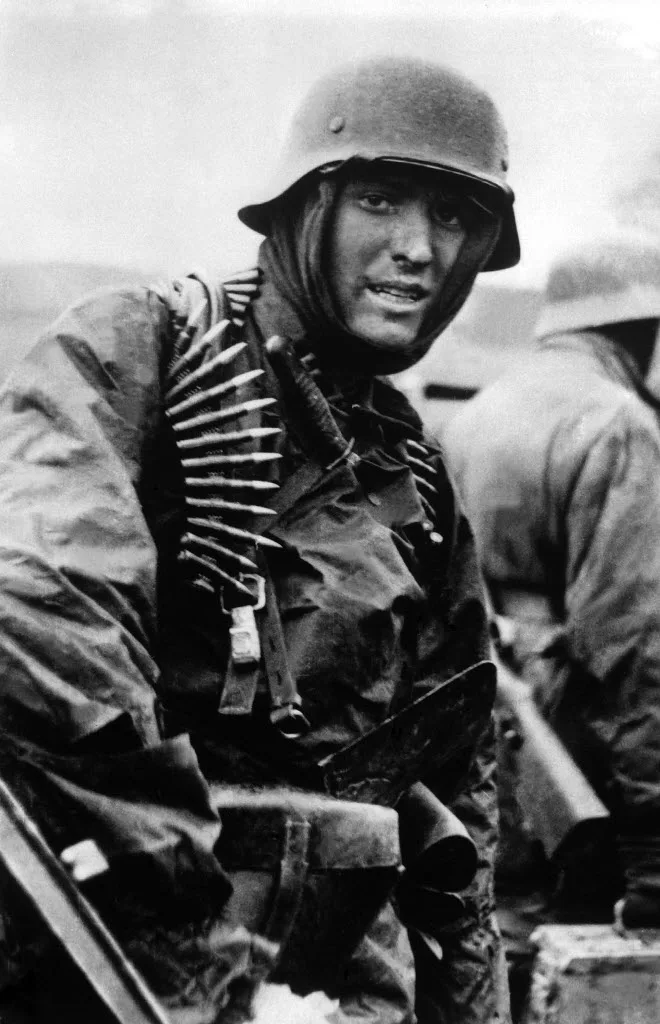
The Vault Militaria is the UK’s newest destination for authentic wartime memorabilia and collectables. Specialising in rare and hard-to-find items from World War I and World War II, we offer history enthusiasts and collectors a carefully curated selection of genuine artefacts.

new items every week
Rare finds
Our team of experts meticulously sources, authenticates, and catalogues each piece, ensuring that you receive only the finest quality items with verified provenance. And we’re adding more and more items on a regular basis.
From battle-worn uniforms and medals to vintage weapons, field equipment, and personal effects, The Vault Militaria brings you closer to the tangible remnants of wartime history.
knowledge & experience
We buy & sell
The founders of The Vault Militaria bring over 50 years of combined collecting experience to the table. They have a pair of keen eyes for the unusual together with an extensive knowledge of wartime collectables to ensure that every item offered is both authentic and exceptional.
With decades spent honing their expertise, they’ve developed an unparalleled ability to source and validate rare military artifacts, making The Vault Militaria a trusted name in the field.
Contact Mark on 07471 058445 or Andrew on 07944 609319
Contact Mark on 07471 058445
or Andrew on 07944 609319
Browse our latest items
-
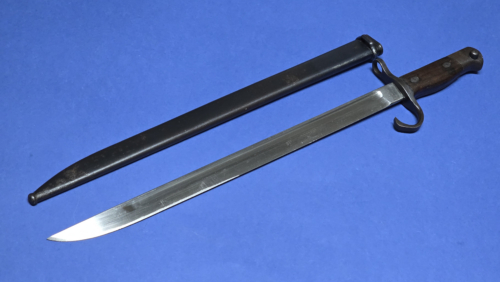
A very nice early example of the Japanese Type 30 Arisaka bayonet, retaining the desirable strongly curved hooked quillon and stamped with the stacked cannonballs mark associated with Kokura Arsenal.
This is a good honest early pattern example that remains in very well preserved condition throughout and displays extremely well.
Blade
The blade is in excellent condition and remains bright with no signs of rust, pitting, or damage. It retains a long, well-defined fuller running along both sides. The front of the ricasso is stamped with the stacked cannonballs mark associated with Kokura Arsenal.
The last portion of the blade leading toward the tip appears to have received a very neat period sharpening which flows naturally into a sharp point. This sharpening is confined to the final section of the blade and the overall blade profile remains correct.
Overall, a very attractive blade that displays extremely well.
Hilt & Grips
The wooden grips remain in excellent condition with minimal wear and no damage. They are secured with the correct two screw bolts and oval washers. The bayonet retains the desirable early strongly curved hooked quillon and the rifle retaining button functions correctly.
The pommel is the early bird-head pattern, and the top of the pommel is stamped with the number 52312. Both the pommel and crossguard still show areas of their original blued finish.
Scabbard
The bayonet is accompanied by its original all-steel scabbard which still retains the majority of its original blued finish. There are some areas of surface rust visible toward the lower section, but overall the scabbard remains in very good condition with no dents or structural damage.
The bayonet slides into the scabbard smoothly and retains a good snug fit, as it should.
Overall
A very nice untouched early example of the Japanese Type 30 bayonet with the sought-after hooked quillon configuration. These early examples are noticeably better finished than many later wartime production pieces and remain popular with collectors.
Blade length: approx. 398 mm
Historical Note
The Type 30 bayonet was introduced in 1897 for use with Japanese Arisaka rifles and would remain the standard Japanese bayonet for nearly half a century.
Early examples such as this were well manufactured with good machining, strong blued finishes and the distinctive hooked quillon design. As production continued into the years surrounding the Second World War, manufacturing methods became increasingly simplified. Late war bayonets often display rougher machining, simplified fittings and a general reduction in finish quality due to wartime material shortages and the pressure of mass production.
Despite these later changes, the Type 30 remained the principal Japanese bayonet throughout both world wars and is now one of the most recognisable bayonets of the 20th century.
We ship to the USA, Europe, and most worldwide destinations.
All items are carefully packed for safe transit.
-
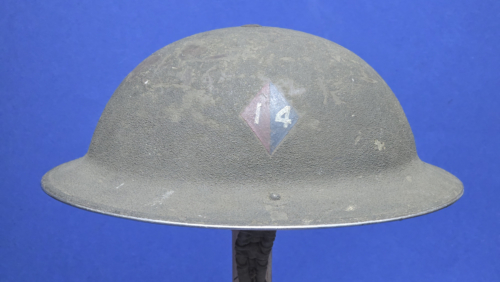
An original 1940 dated WW2 British Mk II steel helmet displaying a Royal Artillery flash to the exterior. The helmet is complete with its original 1940 dated liner and chin strap.
A solid untouched wartime example.
Shell
The shell is stamped RO & CO, identifying manufacture by Rubery Owen & Co, one of the principal manufacturers of the Mk II helmet during the Second World War. The helmet retains its original sand textured khaki paint finish, showing a consistent finish.
Inside the shell there are faint remnants of what appears to have originally been the owner's name written in black. Unfortunately the writing has faded with age and is no longer fully legible, though traces of the inscription can still be seen.
Flash
To the exterior of the helmet is a Royal Artillery flash showing the traditional red over blue colours associated with the regiment. The flash also carries the number 14, which likely relates to a battery, regiment, or formation identifier within the Royal Artillery. Numbered flashes such as this were sometimes applied to helmets to assist with identification within larger formations.
The painted flash remains in excellent condition.
Liner
The helmet retains its original liner clearly stamped TTC 2 1940, identifying manufacture by the Teddy Toy Company Ltd. The liner remains complete, but does show age and wear. Complete with its original web sprung chinstrap.
Overall
The helmet displays very well, and is as an honest wartime example with natural wear consistent with age and service. The helmet retains its correct wartime liner and chinstrap. A good original 1940 dated Mk II helmet displaying a Royal Artillery flash.
Historical Note
The Mk II steel helmet became the standard combat helmet of the British Army from 1939 and remained in widespread service throughout the Second World War. Produced by several British manufacturers, millions were issued to troops serving across Europe, North Africa, and the Far East.
The Royal Artillery played a crucial role during the war, providing field artillery support, anti-aircraft defence, and coastal protection. Formation flashes such as the red over blue Royal Artillery flash were sometimes applied to helmets to assist with identification within larger formations.
We ship to the USA, Europe, and most worldwide destinations.
All items are carefully packed for safe transit.
-
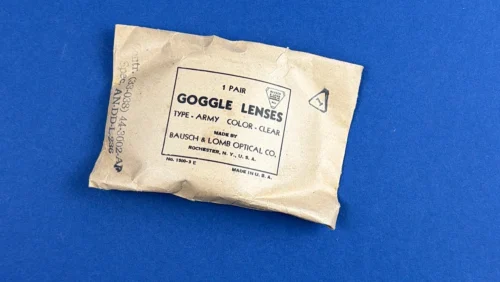
This is an original WW2 U.S. Army Air Forces sealed packet containing a pair of spare goggle lenses, manufactured by Bausch & Lomb Optical Co. of Rochester, New York under wartime contract. The packet is clearly marked “1 Pair Goggle Lenses – Type: Army – Color: Clear” and carries the Army-Navy specification number AN-DD-L-236, confirming production under the joint Army–Navy standardisation system used during the mid to late war period. The contract number (33-038) 44-3002-AF indicates procurement for the U.S. Army Air Forces under a 1944 contract. Bausch & Lomb was one of the United States’ most important wartime optical manufacturers, supplying a wide range of precision equipment including aircraft goggles, aviation sunglasses, bombsight optics, and other specialist optical components used throughout the war. Replacement lens packets like this were supplied through military equipment stores to allow damaged or scratched goggle lenses to be replaced in service. Items like this represent the everyday consumable equipment that supported wartime aviation operations. While small and easily overlooked, sealed packets such as this provide a fascinating glimpse into the logistical supply system that kept U.S. Army Air Forces personnel equipped in the field. This example remains unopened, with the original paper packet still sealed. The printed text is clear and fully legible across the packet, and the original seal remains intact. The lenses inside can be felt through the packet and appear intact, with no indication of breakage. The paper packaging shows some light creasing and handling wear consistent with age, but overall it presents well and remains a very nice untouched wartime example.
-
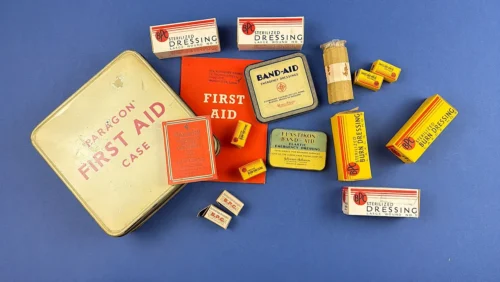
This is an original British “Paragon” First Aid Case No.125, a factory first aid kit introduced under the Factories Act of 1937 and the First Aid in Factories Order of 1938, regulations that required workplaces to maintain approved medical supplies for treating minor injuries. Kits of this type were widely used in British factories and workshops and became a familiar part of the WW2 Home Front, where industrial workers supported the wartime production effort. The case is finished in its distinctive cream enamel paint with bold red lettering reading “PARAGON FIRST AID CASE.” Inside the lid is the original printed instruction sheet titled “Treatment of Minor Injuries,” clearly marked Form 923 – October 1937, referencing the legislation that introduced these kits. The instructions outline the recommended contents and treatment procedures for common workplace injuries such as cuts, burns, and minor wounds. Remarkably, the case still retains a substantial portion of its original contents. These include multiple B.P.C. sterilized wound dressings, burn dressings, a Band-Aid emergency dressing tin, an Elastikon Band-Aid elastic dressing tin, and additional period medical supplies. Also present is the original first aid booklet published by T. J. Smith & Nephew Ltd, manufacturers of Elastoplast and other surgical dressing products. The booklet itself is stamped with the name and address Mrs. Margaret Danby, Radcliffe, Manchester, providing a small but evocative glimpse into the civilian ownership and everyday use of this kit. It’s also worth noting, one of the items in this case is already stamped with the same name which is a beautiful example of continuity. Condition is particularly good for a factory first aid kit of this period. The tin retains strong colour and clear lettering, with only light wear consistent with age and use. The interior remains very clean, and the printed instruction sheet inside the lid is still present and legible. Importantly, many of the medical items inside the case remain intact and well preserved, with bright packaging and clear labels that display very nicely. Overall, it presents far better than many surviving examples, which are often found empty or with heavily deteriorated contents. Industrial first aid kits like this were an essential part of workplace safety during the late 1930s and throughout WW2, particularly in factories and workshops where the risk of minor injuries was common. As such, they form a fascinating and often overlooked aspect of Britain’s Home Front medical preparedness and industrial wartime life. A very well-preserved and visually attractive example of a WW2-era British factory first aid kit, complete with period contents and strong display appeal.
-
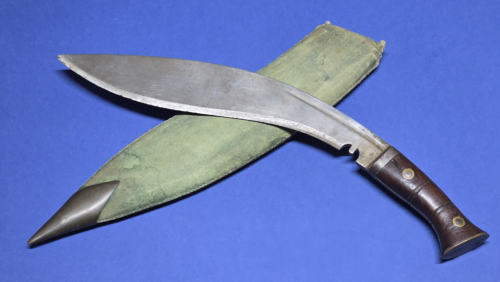
WW2 Gurkha Kukri Fighting Knife – Dated “A.W.42” – Canvas Covered Scabbard
£395.00 SKU: 0390MThe kukri is one of the most iconic fighting knives in military history, forever associated with the legendary Gurkha soldiers who served with the British Army. Feared and respected in equal measure, the Gurkhas developed a formidable reputation for courage and close-quarters fighting during both World Wars. Their traditional kukri knife was not only a weapon but an essential field tool, carried daily and relied upon for everything from combat to camp duties.
This is an original World War II period Gurkha kukri, a strong and honest example showing clear wartime character and service wear.
Blade
The blade remains in good overall condition with honest age-related wear and evidence of sharpening, likely carried out during its period of service. It retains its distinctive forward-curving kukri profile and still finishes into a good, sharp point.
At the base of the blade is the traditional cho notch. This feature is characteristic of kukri blades and serves both practical and symbolic purposes. Functionally it helps prevent blood, sap, or other fluids from running down onto the grip, reducing the risk of the handle becoming slippery in use.
The blade is stamped “A.W.42.” The 42 clearly denotes the wartime year 1942, placing this kukri firmly within the period of the Second World War.
Hilt & Grips
The kukri is fitted with attractive wooden grips secured by the original two brass rivets. The wood shows some light age-related wear and minor handling marks but remains very presentable overall.
The grip flares outward toward the pommel, a design that provides a secure and comfortable hold during use. This flared pommel profile is typical of kukri construction.
Scabbard
The kukri is housed in its original scabbard, which has been covered in wartime canvas. Canvas-covered examples are encountered less frequently than the more typical leather scabbards, making this a particularly interesting variation.
The canvas shows some honest age-related staining and wear consistent with service use, but the stitching remains tight and secure. The scabbard retains its brass chape at the tip, which remains in excellent condition.
Importantly, the blade sits firmly and correctly within the scabbard, confirming that the two have remained together as a matching pair.
Overall
A genuine and well-preserved WWII Gurkha kukri dated 1942, showing honest service wear while retaining excellent character. With its attractive wooden grips, clear wartime date stamp, and original canvas-covered scabbard, this is a desirable example of one of the most recognisable military fighting knives of the Second World War.
Historical Note
Gurkha soldiers from Nepal have served in the British Army since the early nineteenth century and have earned a worldwide reputation for bravery, discipline, and battlefield skill. During the Second World War, Gurkha regiments fought in numerous theatres including North Africa, Italy, and the jungles of Burma.
The kukri was an essential part of the Gurkha soldier’s equipment and a symbol of their identity. Its distinctive forward-curving blade made it equally effective as a fighting weapon and a practical field tool. Over time the kukri became closely associated with the fearsome reputation of the Gurkhas, whose courage and loyalty in battle earned them deep respect throughout the British Army.
We ship to the USA, Europe, and most worldwide destinations.
All items are carefully packed for safe transit. -
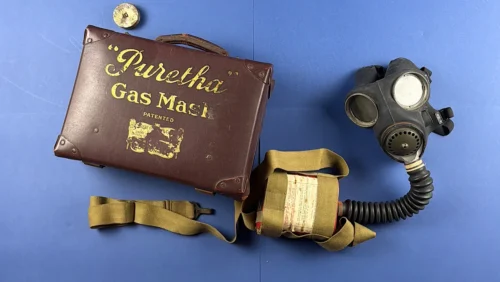
This is an original WW2-era British industrial respirator set manufactured by Siebe Gorman & Co. Ltd, housed in its original “Puretha” carrying case. Siebe Gorman was one of Britain’s most important manufacturers of breathing apparatus and respiratory equipment, supplying diving gear, mine rescue apparatus, industrial respirators, and specialist gas protection equipment throughout the early and mid-20th century. The company marketed a range of respirators under the “Puretha” name during the interwar and wartime period, intended primarily for industrial environments where protection from toxic gases or fumes was required. The set consists of a rubber respirator facepiece fitted with a flexible breathing hose which connects to a chest-mounted filter canister carried in its webbing holder. This hose-fed arrangement was typical of heavier duty respirators designed for prolonged work in contaminated atmospheres, allowing the filter to be carried away from the face and reducing strain on the mask itself. The filter canister retains its original label, which lists protection against gases such as phosgene, chlorine, bromine and phosphine — substances commonly encountered in industrial chemical environments and also associated with wartime gas defence. Respirators of this type were used by industrial workers, chemical plant personnel, mine rescue teams, and specialist emergency services. Equipment from manufacturers such as Siebe Gorman was also utilised by Civil Defence and industrial response teams during the WW2 period. While different in design to the familiar civilian respirators issued to the public, equipment such as this formed part of the wider world of WW2 gas protection and respiratory equipment used by specialist personnel working in hazardous environments. The respirator is housed in its original Siebe Gorman “Puretha” fibreboard carrying case, which retains its internal label and metal fittings. Cases of this style were designed to protect respirator equipment during storage and transport and were commonly supplied with industrial respiratory sets of the late pre-war and wartime era. Earlier respirator cases were often made from leather or heavy canvas, while fibreboard examples such as this became more common during the late 1930s and wartime period. The mask itself also supports a wartime date. It does not bear the yellow Siebe Gorman stamp on the forehead that is commonly associated with later post-war replacement facepieces produced after supplies of Mk V masks began to run out. The absence of this marking suggests this is an original wartime facepiece rather than a later replacement. The case shows honest wear consistent with age and use. The internal label has taken the brunt of this wear, and there is also wear to the handle along with minor damage to one of the corner pieces (see photos). The mask itself is in overall very good condition, with supple rubber, a flexible hose, and a filter canister that remains in good order and retains a 1940s fill date label. The only notable issue is age-related cracking to the rear head harness, which is extremely common with respirators of this type. Overall this is a very interesting example of British respiratory protection equipment from the late pre-war or WW2 period, produced by one of the most important and recognisable manufacturers in the field. Sets of this type illustrate the wider world of wartime gas protection beyond the familiar civilian respirators, representing the equipment used by workers and specialists who might be required to operate in hazardous or contaminated environments.
-
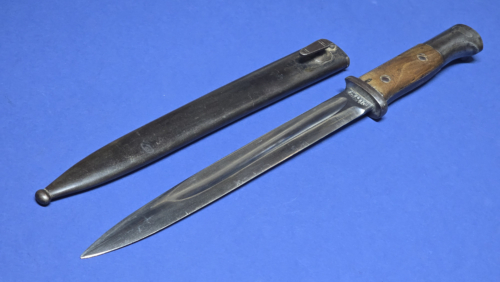
A very attractive and honest First World War German S84/98 bayonet, dated 1917, and produced by Gerbr. Heller, Marienthal. This example presents extremely well for a wartime piece and is particularly interesting due to the matching serial number 2437 appearing on both the blade and scabbard.
Blade
The blade remains in very pleasing condition for a WWI example. It is clean and bright showing minor service wear. The edge has been period sharpened, which has since softened over time, but shows no signs of post war sharpening abuse. The ricasso is clearly marked Gerbr. Heller, Marienthal, with the serial number 2437 stamped. The spine carries the imperial crown over W with the date 17, indicating 1917 manufacture, along with an inspection stamp.Hilt & Grips
The hilt is fitted with attractive light-coloured wooden grips which remain in excellent condition, showing very minor service wear and no damage. The original screw bolts remain in place, with the rifle retaining button being fully functional, and the reverse of the hilt showing an inspection stamp.Scabbard
The bayonet is accompanied by its correct steel scabbard which remains in excellent condition for a First World War example. The scabbard retains a pleasing period finish with no dents or damage, with the throat screw being present. On the rear of the scabbard the serial number 2437 is stamped, matching the blade. This is not a marking style normally encountered on these bayonets, though the photographs clearly show it to be a genuine period stamping, adding an interesting talking point to the piece. The bayonet sits snugly in the scabbard with a good, secure fit.Overall
A very nice WWI German S84/98 bayonet dated 1917, by Gerbr. Heller, Marienthal, with the added interest of a matching serial number 2437 to blade and scabbard.Historical Note
The S84/98 bayonet was the standard bayonet used by German forces during the First World War with the Gewehr 98 rifle. Produced by numerous makers across Germany, wartime examples such as those dated 1917 were manufactured in large quantities to meet the demands of the German army during the later years of the conflict, but still remain hard to find in good condition.
We ship to the USA, Europe, and most worldwide destinations.
All items are carefully packed for safe transit.
-
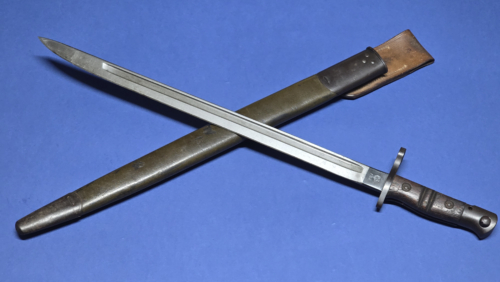
WWI U.S. Model 1917 (P17) Bayonet – Remington – With 1942 Dated British Frog
£155.00 SKU: 0388MA solid and honest U.S. Model 1917 bayonet manufactured by Remington in 1917, later re-inspected in 1921, retaining its correct scabbard and mounted in a British 1942 dated leather frog. A very good example, featuring an interesting and uncommon British-applied belt loop variation.
Blade
The 17-inch blade remains in very good condition, showing light age-related wear, but presenting extremely well overall. The edge has been evenly sharpened with a consistent profile and appears to be period service sharpening rather than later aggressive grinding. The tip is clean and intact. The ricasso retains its original blued finish. Markings are clear and correct: 1917 date with circular Remington maker’s mark to one side; flaming bomb ordnance stamp with U.S. property mark to the other; small “21” re-inspection stamp denoting 1921 arsenal inspection; and a faint but visible “X” bend test stamp.
Hilt & Grips
The walnut grips are in very good condition with no cracks or damage, showing only minor honest wear. They retain the correct twin grooves and original screw bolts. The steel fittings show expected service wear but remain solid. The rifle retaining button functions correctly and the pommel shows its oiling hole.
Scabbard
The bayonet is housed in its correct U.S. pattern scabbard finished in olive drab paint, retaining approximately 97% of its original finish. The metal throat and lower fitting are undamaged with light surface oxidation to the lower mount. Both fittings are marked “MS.” Rear stitching remains tight and intact. The reverse shows lightly scratched initials “WCB,” likely the owners initials; these are shallow and you only see them up close. The bayonet fits the scabbard correctly and securely.
Frog
Mounted to the scabbard is a British leather frog stamped CWS and dated 2/42, indicating manufacture by the Co-operative Wholesale Society in 1942. This represents a later wartime pairing rather than original WWI issue, but is entirely plausible as a service combination. The leather remains supple with clear markings and strong stitching.
Overall
An honest, correctly marked U.S. Model 1917 bayonet by Remington, dated 1917, re-inspected in 1921, complete with scabbard and an interesting WWII British leather frog. Not presented as a factory-original set, the British frog likely represents later service-life use, suggesting the bayonet may have seen continued issue during WWII. A great example with clear markings and good condition throughout.
Historical Note
The U.S. Model 1917 bayonet was adopted alongside the Model 1917 rifle during the First World War, with over two million produced by Remington, Winchester and Eddystone. Many remained in stores after WWI, were re-inspected in the interwar years, and saw further use during the Second World War.
We ship to the USA, Europe, and most worldwide destinations.
All items are carefully packed for safe transit.