
Welcome to The Vault Militaria
Welcome to
The Vault Militaria
Authentic pieces. Timeless stories. Exceptional service.
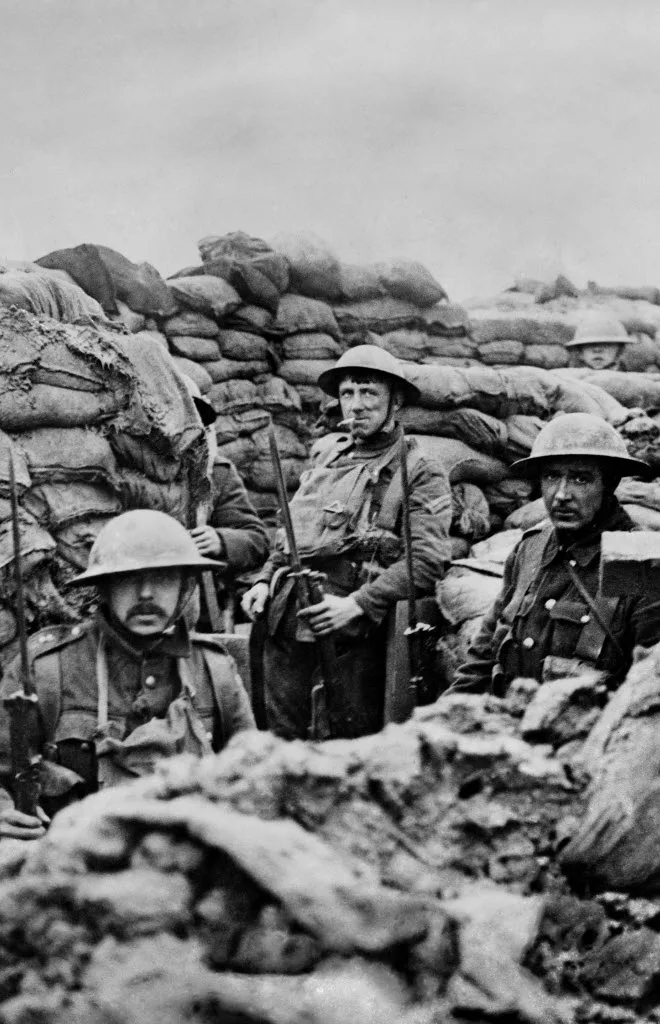
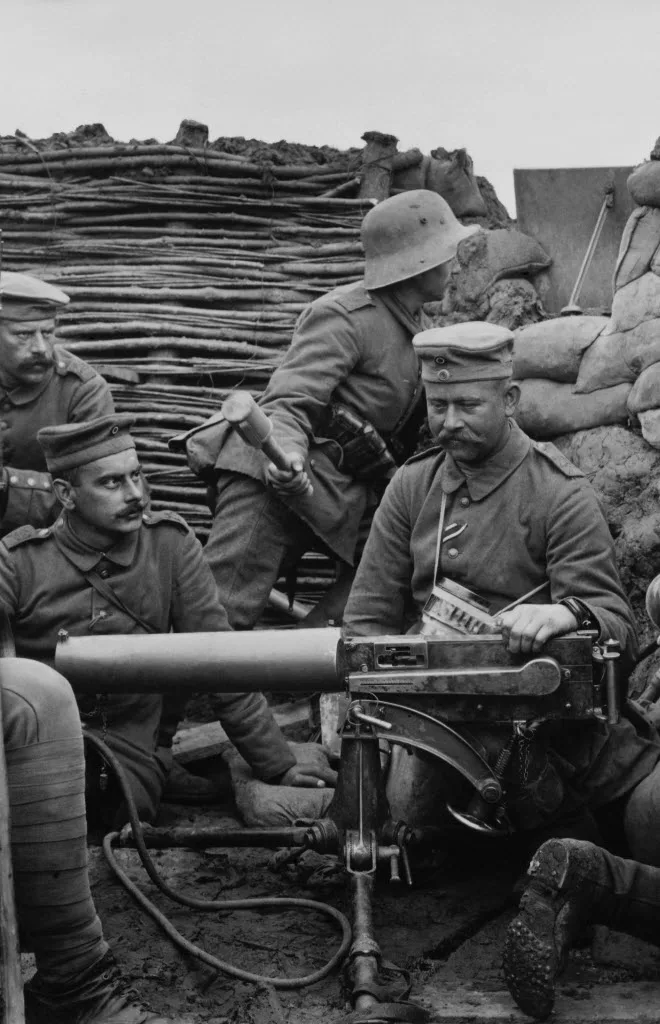
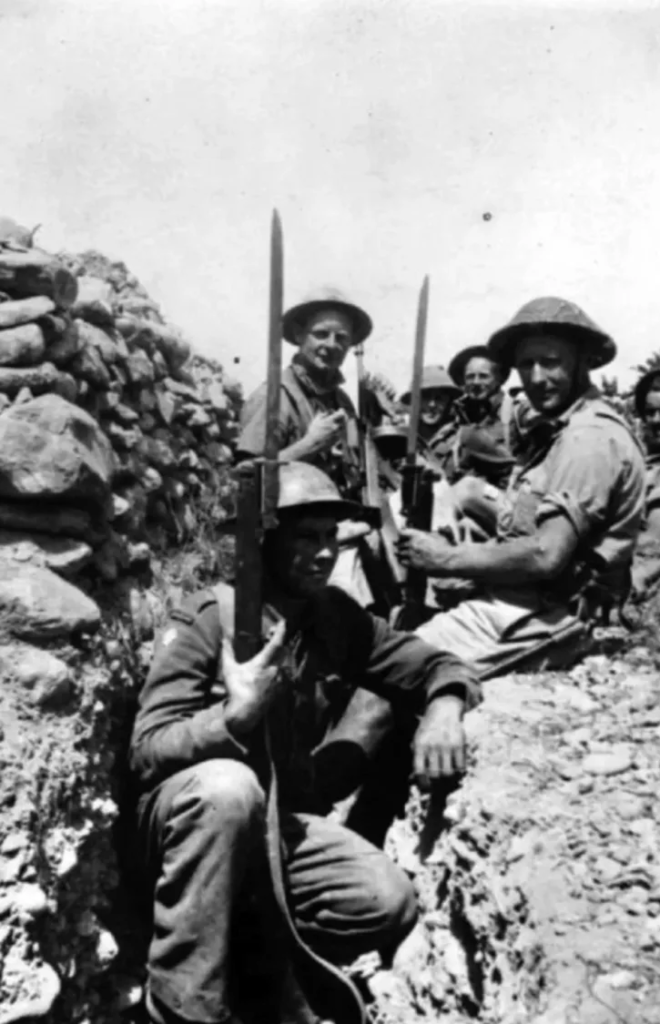
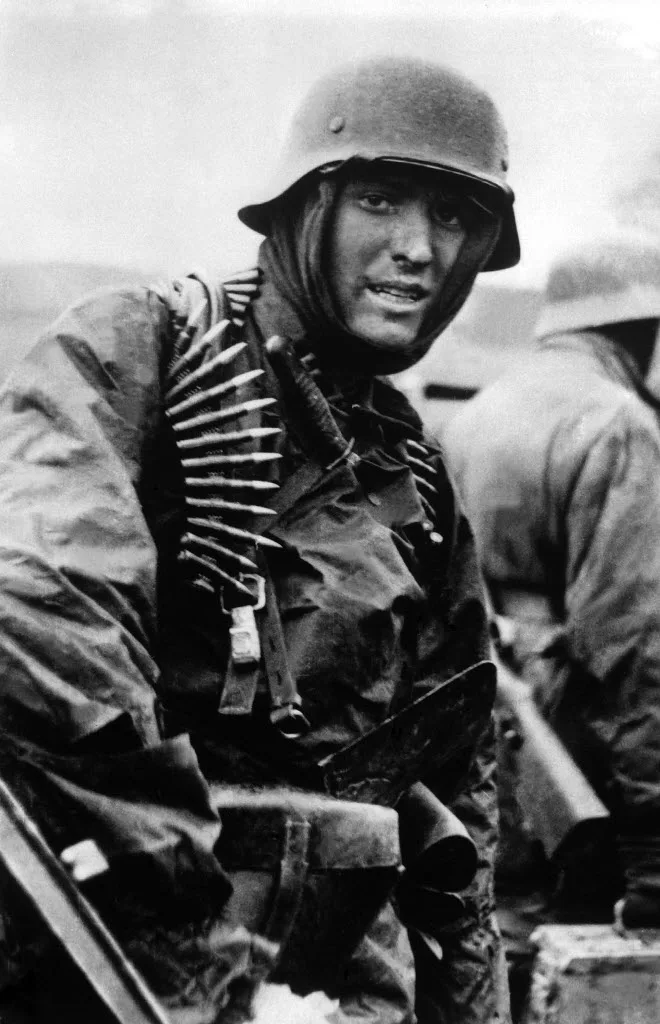
The Vault Militaria is the UK’s newest destination for authentic wartime memorabilia and collectables. Specialising in rare and hard-to-find items from World War I and World War II, we offer history enthusiasts and collectors a carefully curated selection of genuine artefacts.

new items every week
Rare finds
Our team of experts meticulously sources, authenticates, and catalogues each piece, ensuring that you receive only the finest quality items with verified provenance. And we’re adding more and more items on a regular basis.
From battle-worn uniforms and medals to vintage weapons, field equipment, and personal effects, The Vault Militaria brings you closer to the tangible remnants of wartime history.
knowledge & experience
We buy & sell
The founders of The Vault Militaria bring over 50 years of combined collecting experience to the table. They have a pair of keen eyes for the unusual together with an extensive knowledge of wartime collectables to ensure that every item offered is both authentic and exceptional.
With decades spent honing their expertise, they’ve developed an unparalleled ability to source and validate rare military artifacts, making The Vault Militaria a trusted name in the field.
Contact Mark on 07471 058445 or Andrew on 07944 609319
Contact Mark on 07471 058445
or Andrew on 07944 609319
Browse our latest items
-
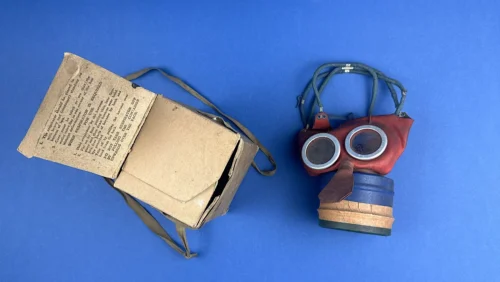
This is a British child’s “Mickey Mouse” style civilian gas mask, produced for civilian and civil defence use and closely associated with the British Home Front during WW2. The distinctive cartoon-style design was introduced during WW2 to reduce fear and encourage children to wear respirators as part of air raid precautions. The rubber facepiece was manufactured by Avon Rubber and carries internal markings including “AVON 5-40”, along with additional mould and tooling codes. These markings are in a format associated with early 1940s Avon production and are consistent with British respirator manufacturing practices of the period. Such markings are generally understood as manufacturer and tooling references rather than definitive issue dates. This example is accompanied by its original cardboard storage box, a scarce survival that adds important Home Front context and display appeal. Cardboard boxes of this type were intended for civilian storage and transport and are far less commonly encountered than the masks themselves. A highly recognisable Home Front item, this piece represents Britain’s civilian air raid precautions and the measures taken to protect and reassure children during wartime and its immediate aftermath. The condition of the box is fairly good, with some rounding of the corners but, no real rips or tears. The original strap is in place and in good condition. As for the mask itself, there is some minor cracking (see photos) on the rubber. However, the filter is in very good condition, all the markings are nice and clear and overall, the rubber is nice and soft. Supple too. The elastic straps still have plenty of spring in them too.
-
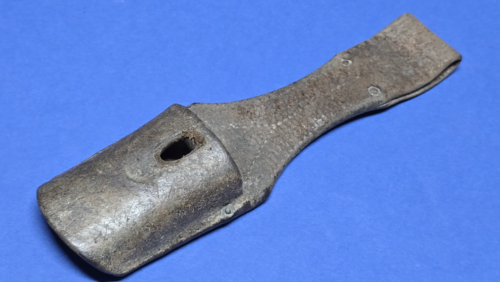
WW1 German 98/05 Leather Bayonet Frog
£85.00 SKU: 0344MOriginal World War I German 98/05 bayonet frog, constructed from thick brown leather and fitted with four brass rivets. This is a genuine service-used example that remains structurally sound, showing honest age and wartime wear throughout.
Leather & Construction
The leather remains supple, thick, and very strong, with surface wear consistent with age and use. The front lug area is well formed and holds a good shape, free from any rips or tears. All four brass rivets are original, and intact, displaying an even period patina.Stitching
The original stitching remains fully intact and tight, with no evidence of repair or replacement. This is a strong indicator of the materials and workmanship to withstand over a century of service, storage, and handling.Condition & Wear
There is a split present to the rear upper section of the frog. This does not affect the structural integrity or the frog’s ability to securely retain a bayonet. Wear and age are present throughout, consistent with wartime service.Overall
A sound and honest World War I German 98/05 bayonet frog showing correct period wear. Not a mint example, but a strong, original piece that displays well and remains fully functional.Recommended Reference
A Collector’s Guide to German Bayonets and Belt Frogs 1825–1945 by Roy Williams. A highly regarded reference work, featuring clear photography and detailed information covering German bayonets and associated accoutrements, making it an invaluable guide for collectors and researchers.
We sell to the USA, Europe, and most worldwide destinations.
All items are securely packed for safe transit.
-
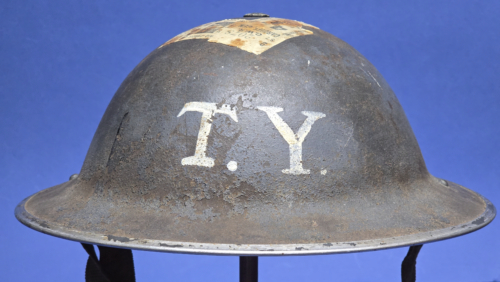
A British WWII Mk II steel helmet in honest, used condition. This example retains its original wartime character and is accompanied by paperwork relating to RAF Towyn, Wales, which was supplied with the helmet at the time of purchase. The helmet also retains an original wartime Great Western Railway parcel label still affixed to the shell, an uncommon survival.
Shell
British Mk II steel helmet shell showing wartime wear throughout. The exterior retains its service-applied finish with areas of paint loss and age-related wear consistent with use. Hand-painted white markings reading ‘TY’ to one side and ‘Y’ to the other are present.
Internally, the shell bears a faint date which appears to read 1943. There are further letters present alongside this marking; however, due to wear and age they are difficult to make out. These appear to include the letters MY.
Liner & Chinstrap
The helmet liner is fully intact, and stamped VERO 1939, by Vero Engineering Co. The liner shows correct period construction with expected age-related wear. The webbing chinstrap shows similar honest wear.
Railway Transit Label
The helmet retains a wartime Great Western Railway parcel label marked Cardiff (General), applied directly to the shell. Such labels were used for the transport of military equipment by rail during the war. Examples still present on helmets are not commonly encountered.
Overall
An untouched example of a WWII British Mk II steel helmet with good period character. The wartime railway transit label, makes this an interesting piece.
Historical Note
The accompanying paperwork relates to RAF Towyn, a Royal Air Force airfield in Wales, which was operational between 1940 and 1945. RAF Towyn was opened in September 1940 as an Anti-Aircraft Co-operation unit supporting nearby training areas. Its primary role involved target towing duties for anti-aircraft gunnery training under Army Co-operation Command.
In December 1943, several flights were reorganised to form No. 631 Squadron, which remained at Towyn until 1945, when operations were transferred and the airfield closed shortly afterwards. Equipment at such stations was routinely moved by rail between depots, airfields, and support locations, providing context for the presence of a Great Western Railway transit label on this helmet.
The accompanying paperwork provides historical context relating to RAF Towyn; however, it does not constitute direct proof of issue or service at the station.
We sell to the USA, Europe, and most worldwide destinations.
All items are securely packed for safe transit.
-
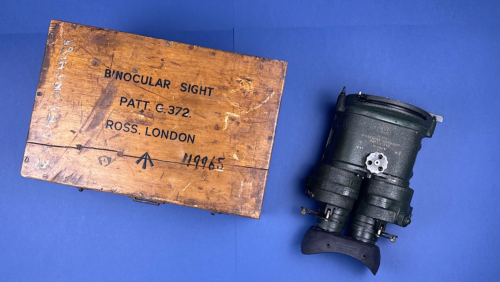
This is an original British Second World War binocular gunsight, Pattern C.372, manufactured by Ross, one of Britain’s principal wartime optical contractors. Officially designated “Binocular Gunsight PATT. C.372”, this pattern was developed for military gun-laying purposes and was used primarily on anti-aircraft, coastal defence, and other fixed or semi-fixed artillery mountings. The sight features fixed ×3½ magnification with individual eyepiece focus adjustment, as intended for military gun-laying use. Other adjustments are service-level settings and have been left untouched. The gunsight is of robust wartime construction, featuring a heavy cast metal body finished in original service paint, with individual eyepieces fitted with rubber eye-cups and external adjustment controls for focus and alignment. The sight retains its original, two level, sliding sun filter, allowing the introduction of tinted glass for glare reduction during bright conditions. It is clearly military-issued, bearing correct wartime markings and the government property arrow, and represents standard wartime production rather than an experimental or post-war variant. The wartime pattern designation, Ross of London manufacture, government property marking, and period construction and finish are all consistent with British military production during the Second World War. This example is accompanied by its original fitted wooden transit and storage case, factory stencilled for the Pattern C.372 and Ross of London. Surviving examples are most often encountered without their original cases, making complete cased sets noticeably scarcer than loose gunsights. The original locking key is also present and functional, further enhancing the completeness of the set. The case shows period personalisation in the form of a hand-applied name added during service; the marking is now worn and difficult to read, but appears to read “E Devonshire”. It has been left exactly as found, and no firm attribution is made. The gunsight and case are in honest, well-preserved condition consistent with wartime service and age. The wooden case shows expected handling wear, surface marks, and age-related wear. The gunsight itself shows service wear to the exterior finish, with no attempt at restoration. The original rubber eye-cups remain present and in notably good condition when compared to most surviving examples, showing only minor surface bubbling while retaining a good degree of suppleness. Many comparable gunsights are encountered with eye-cups that are heavily perished, cracked, or deteriorated, making this a particularly well-preserved feature. The original leather carrying strap is absent, which is not uncommon. Overall, this is a solid, complete, and increasingly hard-to-find example of a British WW2 binocular gunsight, made especially desirable by the survival of its original transit case, working key, sliding sun filter, and better-than-average eyecup condition. It displays extremely well as a substantial and unmistakably wartime artillery optical instrument. PLEASE NOTE: This piece is heavy! The box weighs nearly 3.5kg by itself. The sight alone weighs around 5.5kg. Factoring in packaging you’re looking at over 10kg. However, we have listed it below as 5kg. This is due to limitations of the shipping system which means, the shipping cost is technically cheaper for the customer.
-
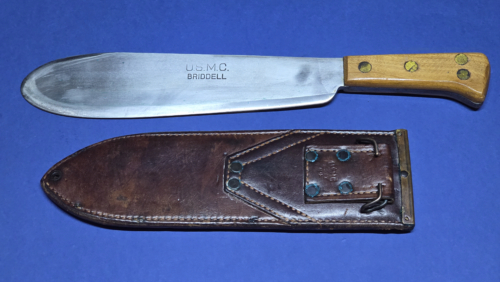
A very impressive and increasingly scarce WWII U.S. Marine Corps bolo / machete, produced by BRIDDELL, complete with its original and well-made U.S. Marine Corps leather scabbard. This is a powerful, weighty utility blade with excellent presence, clearly designed for hard service use rather than refinement.
The overall condition is excellent, particularly the blade and grips, and the scabbard remains solid, and untouched, displaying very minor service wear and age.
Blade
The heavy, rounded bolo-style blade is in excellent condition, retaining a clean surface with no damage or abuse. The edge appears to show a factory or arsenal sharpen rather than later field reworking, and the blade remains crisp and impressive in hand.
Correctly marked U.S.M.C. / BRIDDELL to the blade, the stamp is clear and well-struck. The blade stock is thick and substantial, giving the piece a very purposeful and robust feel, exactly as expected for this pattern.
Hilt & Grips
The light-coloured wooden grip scales are in superb condition, showing no cracking or splitting and retaining a very attractive original tone. The grips are secured by four flush-headed rivets through a full tang construction, all tight and undisturbed.
The grip fits the hand extremely well and contributes to the overall solid, confidence-inspiring feel of the piece.
Scabbard
The original heavy-duty leather scabbard is a highlight of this example. Constructed from multiple layered leather sections, it is extremely well made and remains firm and structurally sound. All stitching is intact, with no loose seams or repairs noted.
The scabbard retains a rich, aged brown tone and shows honest service wear throughout. Areas of untouched verdigris remain around the rivets, consistent with long-term storage and original brass fittings. Period reinforcing staples are present and remain undisturbed.
A riveted brass throat mount is fitted at the top, and the blade fits the scabbard snugly and securely.
The rear belt hanger is stamped U.S.M.C. 1944, with a partially visible maker marking consistent with BOYT, a known wartime U.S. Marine Corps leather contractor.
Overall
A very strong, original example of a WWII U.S. Marine Corps bolo / machete, retaining excellent blade condition, outstanding grips, and a robust, untouched leather scabbard. This is a heavy, impressive piece with real presence and character, far better than the average survivor.
Historical Note
Bolo-type blades were issued by the U.S. Marine Corps during WWII primarily as utility tools, particularly in the Pacific Theatre, where clearing vegetation, preparing positions, and general field work were daily requirements. While not designed as fighting knives, their size and weight made them effective tools in a wide range of wartime conditions.
Examples marked by BRIDDELL are well-documented Marine Corps contracts, and original scabbards dated 1944 reflect late-war production and continued demand for durable field equipment.
We sell to the USA, Europe, and most worldwide destinations.
All items are securely packed for safe transit.
-
Swiss Model 1918 Bayonet – Waffenfabrik Neuhausen – Near Mint Blade
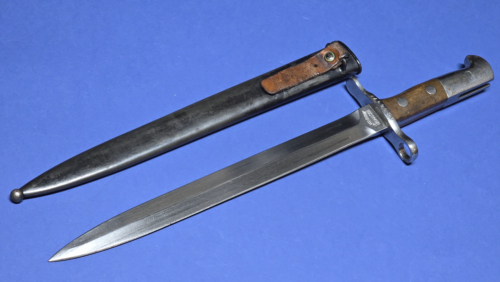
£130.00 SKU: 0340MA truly outstanding example of the Swiss Model 1918 bayonet, issued for use with the Schmidt-Rubin K11 and K31 straight-pull rifles. This example stands out for its exceptional overall condition and is a difficult piece to improve upon, even among Swiss bayonets, which are well known for their high standards of manufacture and care.
Blade
The blade is in near-mint condition, retaining its factory finish exactly as it left production. It remains bright and clean, with a fine, original tip. While I don't like to use the term “mint” for a bayonet over a century old, this example is as close as realistically encountered. There are no signs of misuse or later alteration, and the blade presents beautifully throughout.
The ricasso is crisply marked by Waffenfabrik Neuhausen, one of Switzerland’s most respected state arms manufacturers, known for producing precision military equipment to exceptionally high standards.
Hilt & Grips
The wooden grips are in excellent condition, showing minimal wear, with only one indentation to one side. The grip plates are secured by flush-fitted rivets on both sides, sitting neatly into the grips as intended. The rifle retaining button functions perfectly, and a “P” inspection mark is present beneath it, a marking frequently encountered on Swiss bayonets of this period.
The crossguard bears the original army-issued serial number, 859697. Beneath the crossguard is the Swiss cross accompanied by a small inspection circle, both cleanly struck and clearly visible.
All metal components remain bright and well preserved, with a clean appearance.
Scabbard
The scabbard is equally well preserved, retaining a large amount of its original blued finish. A Swiss cross stamp is present on the lower ball finial, as commonly seen on correct examples. This scabbard still retains its original leather belt tab, a feature often missing, along with a “P” inspection mark above the tab and a further “P” mark on the throat. The original throat screw is still present. and the bayonet fits the scabbard perfectly, with a snug, correct fit.
Overall
An exceptional Swiss Model 1918 bayonet in superb condition, complete with an equally strong scabbard.
Historical Note
The Swiss Model 1918 bayonet was introduced during the later stages of the First World War and reflects Switzerland’s emphasis on precision engineering and long-term durability. Although Switzerland remained neutral, its military equipment was produced to exceptionally high standards, resulting in bayonets that often survive in far better condition than those of combatant nations.
We sell to the USA, Europe, and most worldwide destinations.
All items are securely packed for safe transit.
-
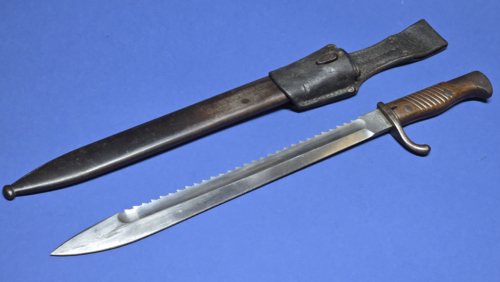
A World War I German S98/05 sawback bayonet manufactured by Waffenfabrik Mauser A.G., Oberndorf a.N., one of the principal producers of this pattern during the Great War. This example remains in excellent overall condition and displays very well, with an excellent condition bright blade.
Hilt & Grips
Fitted with walnut grips, showing an attractive, rich colour and remaining in excellent condition. The grips are secured by the usual two original screw bolts. The rifle retaining button is fully functional. The hilt bears a single Imperial acceptance stamp to the top. The flash guard remains in excellent condition, free from the indentations often encountered on these bayonets.Blade
The blade is in very fine condition, remaining bright with a clean appearance. It has been sharpened but not excessively and retains a strong, well-defined tip. The sawback teeth are extremely sharp and fully intact, making this a much better-than-average example. The spine is correctly marked with the Imperial crown over “W”, the date 1917, and an additional acceptance stamp beneath.Scabbard
The steel scabbard remains in very good condition and retains its original throat screw. Inspection stamps are present to both the throat and the lower ball. A decent amount of the original bluing survives, particularly to the front face, with more honest wear to the reverse. A couple of very minor indentations are present, only noticeable on close inspection. The blade fits the scabbard snugly and correctly.Frog
Accompanied by an original wartime leather frog, correct for this pattern bayonet. The frog is structurally sound, with all four rivets intact and the original stitching present throughout. The leather remains thick and strong. There is some visible damage to the rear of the frog; however, this does not affect its structural integrity and is best assessed from the photographs.Overall
A very nice S98/05 sawback bayonet in very good, highly collectible condition. An honest example with strong markings, excellent blade condition, and correct original accessories. A desirable piece for the German WWI bayonet collector.Historical Note
The sawback version of the S98/05 bayonet was primarily issued to pioneer and engineer units, with the saw intended for field construction and utility work. During the First World War, sawback bayonets accounted for only a small percentage of total S98/05 production compared to standard plain-bladed examples. Due to wartime controversy and post-war modification or destruction, original intact sawback bayonets are significantly scarcer today.
We sell to the USA, Europe, and most worldwide destinations.
All items are securely packed for safe transit.
-
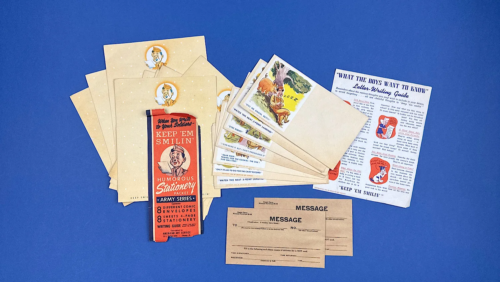
This original WW2 US Army “Keep ’Em Smilin’” Humorous Stationery Packet dates to 1942 and represents a complete morale-focused correspondence set produced for American servicemen and their families during the Second World War. Issued as part of the Army Series and published by American Art Service, these packets were designed to encourage letter writing while keeping communications light-hearted and reassuring during wartime separation. The set includes all original contents as specified on the packet: eight different illustrated cartoon envelopes, eight unused 4-page “Keep ’Em Smilin’” writing sheets, and the original “What the Boys Want to Know” letter-writing guide. The guide offers period advice to families on what subjects to include in letters to soldiers, making it one of the most historically interesting and often missing components of these sets. The original outer packet wrapper is also present and displays honest wartime handling wear, including opening tears and paper loss at both the top edge and the lower section where the packet was originally opened. All items are original wartime examples and remain well matched as a group. The writing paper is unused, the envelopes retain strong printed colour, and the writing guide is clean and fully legible. Two of the cartoon envelopes are lightly stuck together, a common occurrence with wartime paper items stored for long periods, but all eight envelopes are present. We have also included two original US Army Signal Corps M-40 message envelopes. These are not part of the original “Keep ’Em Smilin’” packet contents, but they are contemporary wartime items and add useful contextual value to the group, illustrating the broader range of correspondence and communication material in use during the period. Overall, this is a complete and well-preserved WW2 American morale stationery group, offering strong visual appeal and an excellent insight into the social and psychological aspects of wartime communication.