
Welcome to The Vault Militaria
Welcome to
The Vault Militaria
Authentic pieces. Timeless stories. Exceptional service.
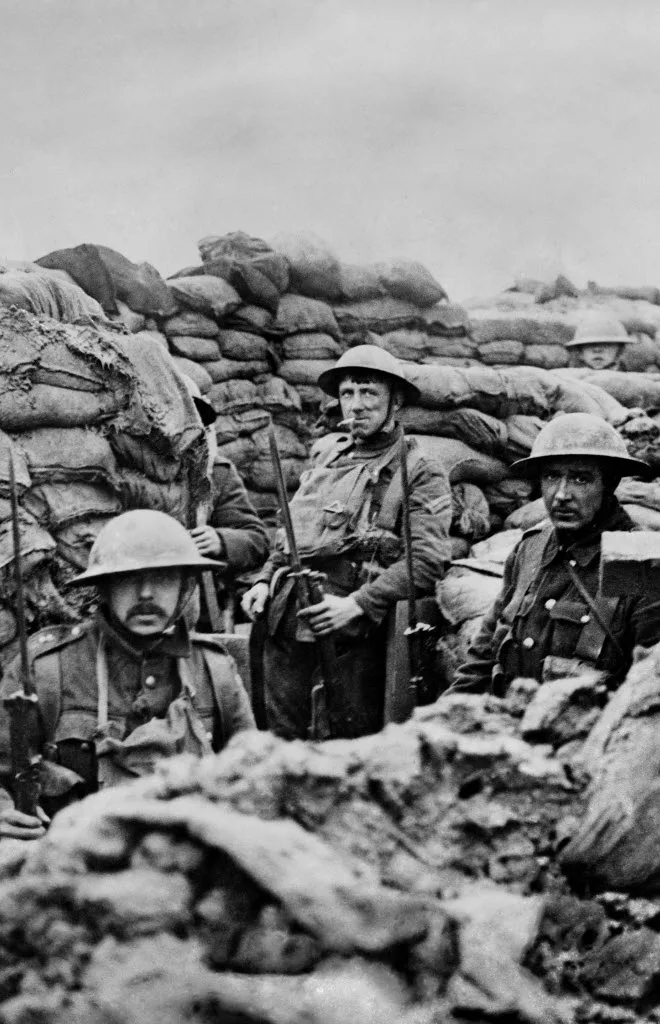
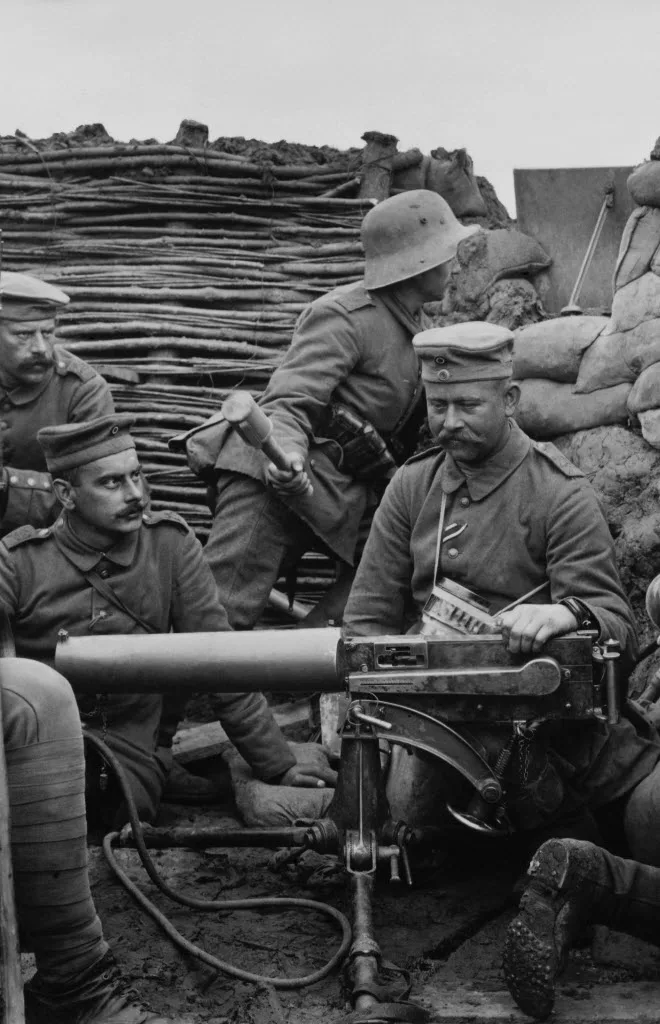
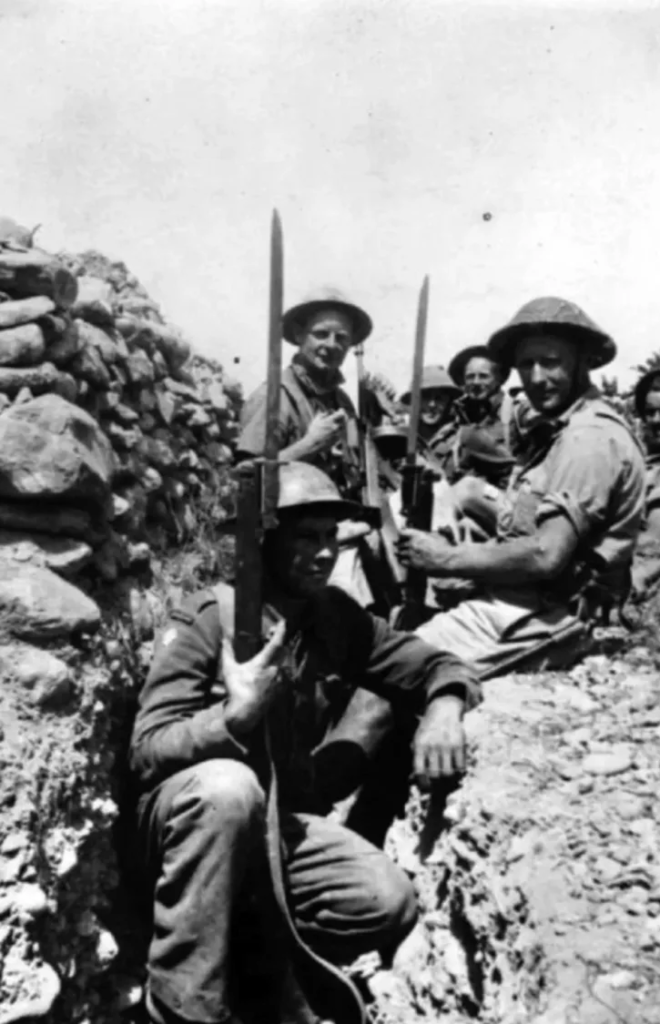
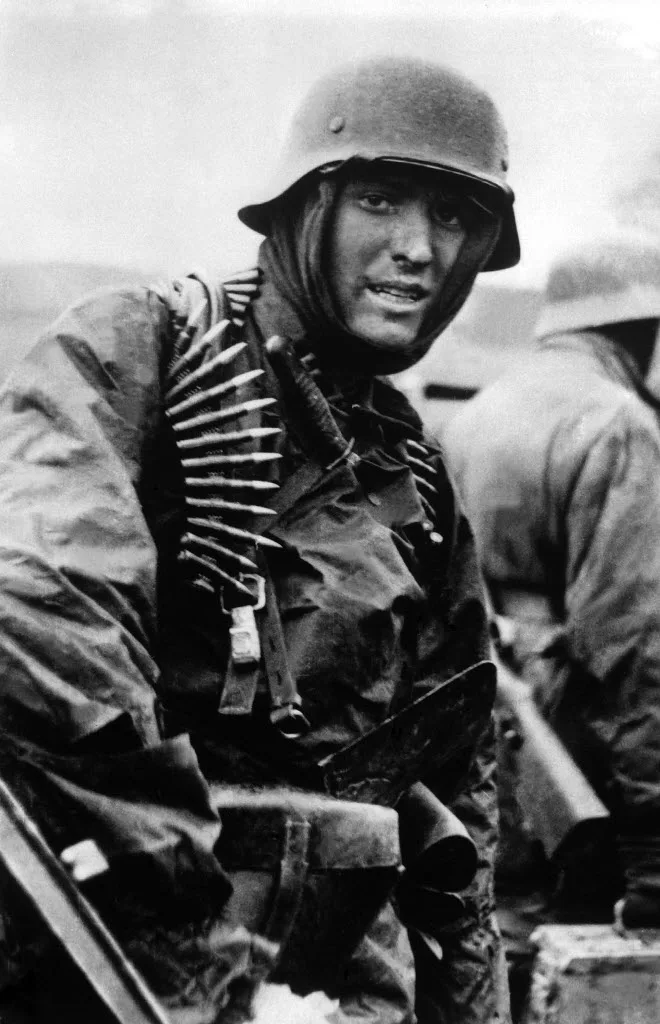
The Vault Militaria is the UK’s newest destination for authentic wartime memorabilia and collectables. Specialising in rare and hard-to-find items from World War I and World War II, we offer history enthusiasts and collectors a carefully curated selection of genuine artefacts.

new items every week
Rare finds
Our team of experts meticulously sources, authenticates, and catalogues each piece, ensuring that you receive only the finest quality items with verified provenance. And we’re adding more and more items on a regular basis.
From battle-worn uniforms and medals to vintage weapons, field equipment, and personal effects, The Vault Militaria brings you closer to the tangible remnants of wartime history.
knowledge & experience
We buy & sell
The founders of The Vault Militaria bring over 50 years of combined collecting experience to the table. They have a pair of keen eyes for the unusual together with an extensive knowledge of wartime collectables to ensure that every item offered is both authentic and exceptional.
With decades spent honing their expertise, they’ve developed an unparalleled ability to source and validate rare military artifacts, making The Vault Militaria a trusted name in the field.
Contact Mark on 07471 058445 or Andrew on 07944 609319
Contact Mark on 07471 058445
or Andrew on 07944 609319
Browse our latest items
-
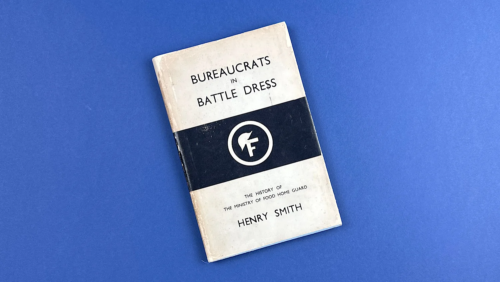
This original post-war publication, Bureaucrats in Battledress by Henry Smith, records the history of the Ministry of Food Home Guard — one of the most unusual and rarely documented Home Guard units. Produced in a small print run shortly after the war, it offers a detailed account of the department’s wartime duties, training, organisation, and personnel, complete with internal photographic plates. Copies of this title were produced with thin card covers that are prone to wear, and surviving examples are seldom found in clean condition. This copy shows some wear to the back cover but remains complete and internally clean, with all photographic plates present. A scarce and appealing piece of Ministry of Food and Home Guard history, ideal for collectors of the wartime Home Front. As shown in the photographs, the back cover has an area of surface paper loss affecting only the outer printed layer. This is not a tear and does not impact the integrity of the underlying card, which remains structurally sound. The book was originally produced with a two-layer card wrap, and the wear is confined solely to the top surface. There are no pages missing, and aside from a handwritten name on the inside cover (see photos), the interior is free from markings. No pages are folded or creased, and the spine remains in very good, sound condition.
-
A completely untouched WW2 British MKII helmet, both shell and liner dated 1940, and produced by the early-war maker JSS (John Sankey & Sons). This example remains exactly as found - honest, uncleaned, and showing its original paint, wear, and patina. The helmet carries a hand-scratched surname "Surman" to the inner rim, along with additional scratched numbers on the opposite side (see photos). These markings are period done, although due to age and wear, its hard to work out the full name and serial number. To the front of the helmet is a small cartoon-style emblem, which has the distinctive style of 1930s-1940s British humour artwork. I've tried researching similar emblems and artwork styles from the period, but this one has completely stumped me - unfortunately I can't identify what it refers to. I would be very interested to know what it represents if anyone recognises it.
Shell
Maker: JSS (John Sankey & Sons) Date: 1940 stamped to the inside rim. Finish: Original wartime khaki paint. Wear: Paint losses, scuffs and age-consistent surface marks - nothing cleaned or altered. Front Emblem: Unidentified cartoon-style character within a circle.Liner
Date: Faintly stamped 1940, matching the shell. Construction: Early-war MKII - cross pad crown. Condition: Age toning and expected wear, but completely original to the helmet. Chinstrap: Wartime web strap showing age and handling wear.Overall
A very honest, totally untouched early-war MKII with both shell and liner dated 1940, a personally scratched name, and serial number, with an intriguing cartoon emblem. This helmet displays very well, and offers genuine research potential for collectors who like to dig deeper.Historical Note
The British MKII helmet was introduced just before the war and became the standard combat helmet for British and Commonwealth forces throughout the Second War World. Produced in vast numbers during the early war years, helmets dated 1940 were issued across the British Army, Home Guard, Civil Defence, and numerous supporting units during the period.
We sell to the USA, Europe, and most worldwide destinations.
All items are securely packed for safe transit.
-
This original WW2 ARP Rescue Service Manual, issued as Air Raid Precautions Training Manual No. 3, is a genuine wartime example used to train Britain’s Civil Defence rescue teams during enemy air raids. This is the 1st Edition text, printed in 1942 and reprinted in 1944 by His Majesty’s Stationery Office (HMSO) to meet the continuing demand for training material during the V-1 and V-2 bombing campaign. Designed for Rescue and Heavy Rescue Parties, this manual covers the essential procedures used to locate, reach, and extract casualties from bomb-damaged buildings. Topics typically include structural hazards, shoring and tunnelling methods, working in debris, casualty handling, equipment use, and gas precautions. These booklets were standard issue for ARP personnel and would have been carried, studied, and referenced by rescue workers across the UK. This example remains in very good, completely original wartime condition, with the correct kraft-paper style covers, clean printed lettering, and the clear HMSO crown and date: “1942 (Reprinted, 1944)”. A highly collectable Home Front item and an excellent reference for collectors, reenactors, display builders, and anyone interested in Civil Defence history. A fully authentic WW2 Rescue Service manual and a harder-to-find edition compared to the more common First Aid booklets. This manual is in very good condition overall, with a slight fold to the front cover and a small tear on the spine (see photos). A minor stain affects the corner of the first dozen or so pages, but the text remains clean and perfectly legible. There is no handwriting, no missing pages, and the covers present well for an original wartime example.
-
WW2 British Wooden-Soled Utility Clogs – Broad Arrow Marked
£90.00 SKU: 0127AA rare and well-preserved pair of WW2 British Government-issue utility clogs, complete with broad arrow markings and showing almost no wear. An uncommon survivor of wartime material shortages, ideal for Home Front, medical service, and Ministry of Supply collectors. These original wooden-soled clogs are a classic example of the economy footwear produced under Britain’s strict wartime material restrictions. Fitted with black leather uppers and broad arrow stamps, they were issued to hospitals, factories, and civilian services where practicality mattered more than appearance. During WW2, high-grade sole leather was prioritised for frontline boots, forcing the Ministry of Supply to adopt alternative designs. Although the uppers are leather, this wasn’t extravagance — upper leather was still relatively accessible, while sole leather was critically scarce. Wooden soles with small scrap-leather tread pads offered an efficient compromise, saving valuable materials while providing durable, functional footwear. The leather tread pads improved grip, durability and quietness on hard floors, making them far more usable than bare wooden soles. This hybrid construction became the standard pattern for wartime utility clogs. This pair remains in good overall condition. The metal rivets show some surface rust, but the tread pads appear barely used. The upper leather has stiffened slightly with age but remains safely flexible. Each clog carries a clear broad arrow stamp, inspector’s mark, and retains its original lace. -
A rarely encountered Italian M1891 Truppe Speciale bayonet and chopper set, complete with its original multi-tool leather carrier. This is the first complete example we've handled, as these sets seldom appear on the market. Originally developed during the First World War for engineers, pioneers, colonial troops and specialist detachments, these combined carriers continued in service into the Second World War, particularly in North Africa, the Balkans and Italy itself.
Blade:
The bayonet remains in very good condition, showing approx. 90-95% of the original blued finish, with only light wear consistent with age. The factory sharpened edge is still visible, with no signs of post war sharpening. The fullers are clean, and the blade has not been polished or altered. A lovely, honest example.Hilt & Grips:
The wooden grips are in solid condition, showing some handling and small indentations, but no cracks or repairs. Rivets remain tight, and the rifle retaining catch is fully functional with a positive spring. The crossguard is unit-marked "QN312", a period army/rack number used to identify the weapon within a sub-unit. These alphanumeric combinations (letter followed by a number series) were commonly applied at unit level and vary widely. The reverse of the crossguard is clearly stamped "Terni", confirming manufacture by the Regia Fabbrica d'Armi di Terni, one of Italy's principal state arsenals responsible for production of M1891 bayonets.Scabbard:
Correct steel type scabbard retaining most of its original black finish. No dents, splits or structural damage. Fits the bayonet tightly and securely, as it should. Throat and finial are undamaged.Chopper/Machete:
The accompanying chopper shows field/use wear to the blade as expected, but remains solid. The handle is of typical wrapped wood construction, showing age and wear, with its characteristic L-shaped steel guard ( intended both as a knuckle guard, and for hanging from equipment when not in the main carrier). The blade has been sharpened, and does show some light staining, although, I do believe some of this light staining could possibly be polished out if the next owner decides to do so. We choose not to touch our items and pass them on in the same condition they come to us in.Leather Carrier:
The leather carrier is arguably the hardest component of the set to find. This example is in excellent condition for its age, retaining: Complete stitching throughout Correct twin belt loops All straps intact, including the bayonet retention strap Firm inner bracing proper tailored slots for both the scabbard and the chopper Leather remains supple with a strong colour. A very strong example of this rare special-troops carrier.Overall:
A very scarce, complete Truppe Speciale bayonet and chopper combination, exactly as issued in WW1-WW2 period. A highly desirable addition to any serious Italian edged weapons collector.Historical Note:
Originally introduced during the First World War for Italian engineer, pioneer and colonial units, the Truppe Speciale carrier allowed troops to carry both a bayonet and a chopping tool in one integrated system. Stocks continued in service into the Second World War, particularly in Africa and the Balkans, where clearing tools were essential.
We sell to the USA, Europe, and most worldwide destinations.
All items are securely packed for safe transit.
-
A scarce and highly desirable WW2 Auxiliary Territorial Service (ATS) Leather Jerkin, produced under War Office contract by Hector Powe Ltd. ATS jerkins are significantly less common than the standard men’s pattern and were issued primarily to drivers, mechanics, searchlight crews and other technical personnel throughout the war. This example displays all the correct features unique to women’s issue jerkins, including the factory-sewn rear waist belt, more shaped waist, narrower arm openings and the slightly offset front buttoning. These construction traits are characteristic of the early ATS pattern and differ noticeably from the boxier, belt-less men’s Army jerkin. The leather itself has the distinctive early-war mottled, multi-panel appearance, created by the use of mixed hides and uneven dye absorption during wartime production — a finish strongly associated with 1940–41 manufacture. Inside, the printed label states “Jerkin, Leather, A.T.S., Size No. 7” with height and bust ranges, the maker’s details, the War Department broad arrow and a faint 1941 date. Although the printed date is light, the maker provides a much firmer indicator: Hector Powe is known to have produced ATS leather jerkins during the 1940–41 contract period only, and is not associated with the later 1942 production run. The pattern, label style and material all align precisely with this early wartime output. Two period ink marks are present — a circular depot or inspector’s stamp beneath the label, and a smudged date stamp across the size line, almost certainly reading “July 1941” — both consistent with wartime inspection and handling. This is an excellent and increasingly difficult-to-find example of ATS cold-weather clothing, ideal for collectors of women’s service uniforms, British Home Front material and early-war uniform development. This jerkin is guaranteed original WW2 manufacture. The Hector Powe label, early ATS pattern, distinct women’s tailoring features and surviving wartime inspection stamps together provide strong, multi-point authentication of this piece as a genuine and early-production 1941 ATS-issue leather jerkin.
-
WW2 German K98 Brown Leather Frog – Stitching & Rivets Intact
£75.00 SKU: 0321MA genuine WW2 German K98 brown leather bayonet frog - a nice, honest example showing age and service use but still perfectly respectable. Brown frogs were used by the Heer (Army) and Luftwaffe, alongside the more common black types. This example remains strong, with all stitching and rivets intact. Although the leather shows wear from use and time, the front face of the frog, around the lug hole - remains in noticeably better condition. Conveniently, this is the part that displays most prominently when fitted to a K98 bayonet. A solid, presentable frog that would display nicely on a decent K98 bayonet - not mint, but certainly not poor condition either.Leather & Condition:
Brown wartime leather, strong throughout. Stitching intact and firm. All rivets present and strong. Leather remains flexible, not cracked or hardened. No visible maker marks remaining due to natural wear. Remains untouched, with no signs of the leather been treated.Recommended Reference:
For collectors interested in learning more about German bayonet frogs, we highly recommend Roy William's A Collector's Guide to German Bayonet Belt Frogs 1825-1945. It remains one of the most detailed and reliable studies on the subject, covering construction methods, stitching variations, leather types, unit usage, and period-specific traits from the imperial era through WW2. -
WW2 German K98 Bayonet – 1942 – E.& F. Horster – Matching Numbers – Frog
£295.00 SKU: 0320MHere we have a nice WW2 German K98 bayonet, matching numbers, dated 1942 and made by E. & F. Horster (ASW), complete with its frog. A good honest example throughout.Blade:
The unsharpened blade is in excellent overall condition, still holding around 95% of its original bluing. One side is marked 42 ASW (1942 - E. & F. Horster), and the other side carries the serial number 5844. The only small point worth mentioning is that the tip isn't quite as fine as we usually see on some examples.Hilt & Grips:
The bakelite grips are the darker type and remain in excellent condition, with no cracks or damage, and only the lightest signs of wear. Both screw bolts are present, and the flashguard is free from any indentations. The rifle-retaining button works exactly how it should, and the top of the hilt shows the usual two Waffenamt stamps.Scabbard:
The scabbard is nice and straight, showing no dents or damage. It shows areas of original bluing remaining, mixed with mostly light surface rust. The lower ball carries a further Waffenamt stamp, and the throat screw is present. The front is stamped with the matching serial number 5844, and the reverse shows 42 ASW. The blade fits the scabbard perfectly, as it should from a matching pair.Frog:
It comes with a late-war, crude K98 frog, completely original to the period. A very similar example is shown on page 234 of Roy William's book "A Collector's Guide to German Bayonet Belt Frogs, 1825-1945." These late-war frogs were put together quickly using previously-used leather parts, often showing wide, uneven stitching-and this one fits that description well. The small perforated holes around the front also match the reused-leather construction noted in the book. Despite the crude finish, the frog is structurally sound, with all four rivets in place.Overall:
A good honest 42 ASW matching-number K98 bayonet, that would display very well.Recommended Reference:
For collectors interested in German bayonet frogs and their construction, I highly recommend Roy William's "A Collector's Guide to German Bayonet Belt Frogs 1825-1945". It's one of the most detailed works on the subject. An excellent reference for identifying frog types, materials, stitching patterns, and makers.
We sell to the USA, Europe, and most worldwide destinations.
All items are securely packed for safe transit.