Welcome to The Vault Militaria
Welcome to
The Vault Militaria
Authentic pieces. Timeless stories. Exceptional service.
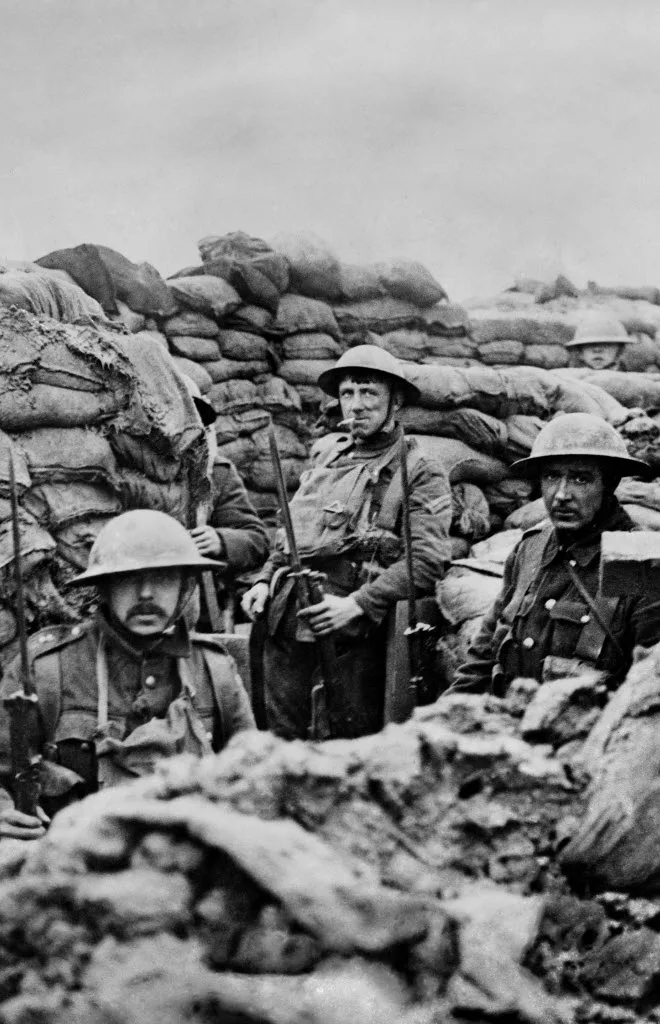
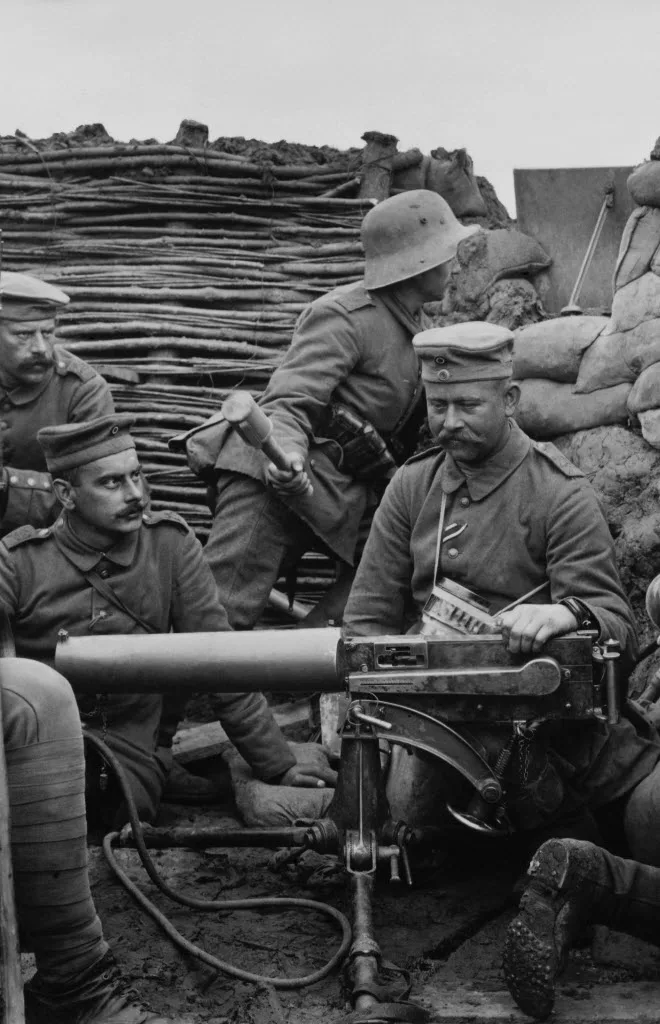
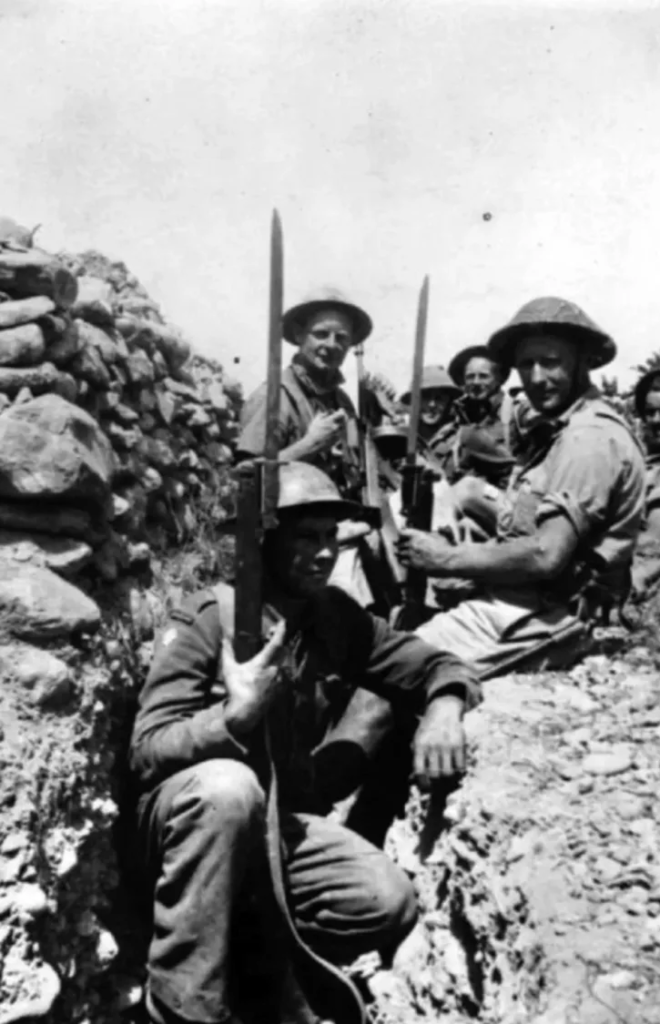
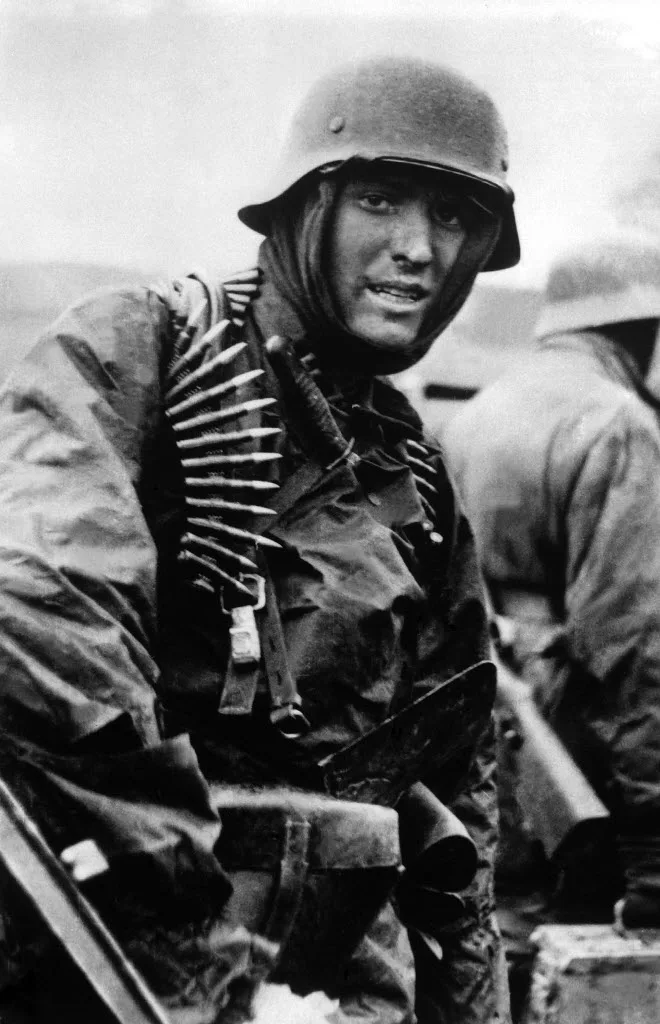
The Vault Militaria is the UK’s newest destination for authentic wartime memorabilia and collectables. Specialising in rare and hard-to-find items from World War I and World War II, we offer history enthusiasts and collectors a carefully curated selection of genuine artefacts.

new items every week
Rare finds
Our team of experts meticulously sources, authenticates, and catalogues each piece, ensuring that you receive only the finest quality items with verified provenance. And we’re adding more and more items on a regular basis.
From battle-worn uniforms and medals to vintage weapons, field equipment, and personal effects, The Vault Militaria brings you closer to the tangible remnants of wartime history.
knowledge & experience
We buy & sell
The founders of The Vault Militaria bring over 50 years of combined collecting experience to the table. They have a pair of keen eyes for the unusual together with an extensive knowledge of wartime collectables to ensure that every item offered is both authentic and exceptional.
With decades spent honing their expertise, they’ve developed an unparalleled ability to source and validate rare military artifacts, making The Vault Militaria a trusted name in the field.
Contact Mark on 07471 058445 or Andrew on 07944 609319
Contact Mark on 07471 058445
or Andrew on 07944 609319
Browse our latest items
-
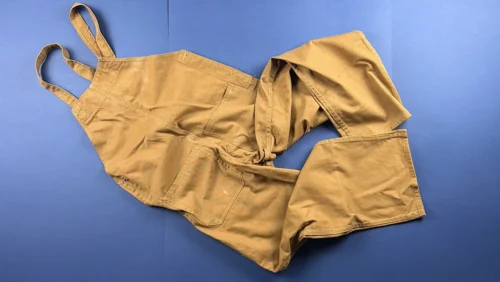
This is an original and clearly dated 1943 Women’s Land Army bib and brace overall, issued for use during WW2 and worn as part of Britain’s agricultural war effort on the Home Front. Few garments symbolise the British Home Front more strongly than Women’s Land Army overalls. Worn by the “Land Girls” who replaced male farm labourers serving overseas, these practical working garments became an enduring image of wartime resilience. While badges and paperwork survive in reasonable numbers, genuine labelled uniform pieces such as this are considerably harder to source. The interior retains its original woven contract label reading “Overalls, Bib & Brace – Women’s Land Army”, Size 1, and dated 1943. The date places this example firmly in the middle years of the war, at a time when Britain was still heavily reliant on domestic food production and agricultural labour. The construction is entirely consistent with wartime government issue: heavy cotton drill fabric, reinforced strap stitching, twin rear patch pockets, and original brown composite utility buttons typical of mid-war production. This is not a theatrical or reproduction piece, but an honest working garment. Signs of genuine agricultural use remain visible, including light staining, small paint or lime flecks, and minor rust specking near the lower leg. There is slight stress visible to one strap stitching area, but it remains secure and original. All buttons are present and period correct. There are no modern alterations or repairs evident. The overall structure is sound, and the garment displays well while retaining authentic period character. Textiles from the Women’s Land Army are increasingly sought after by collectors of WW2 Home Front material, women’s history, and British social history. Complete, labelled, wartime-dated examples such as this represent a tangible connection to the civilian war effort and the transformation of Britain’s workforce between 1939 and 1945. A scarce and evocative original WW2 British Home Front uniform garment, ideal for the serious collector or as a strong display piece within a Women’s Land Army collection.
-
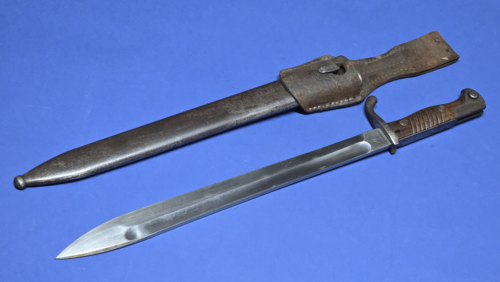
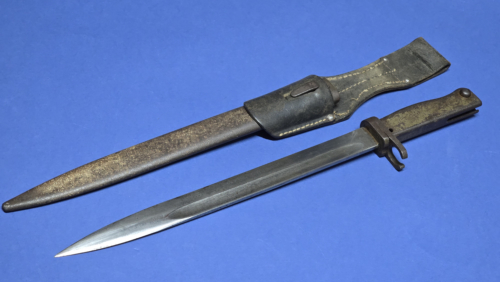
A very presentable and iconic German World War I S98/05 bayonet, widely known amongst collectors as the “Butcher Bayonet” due to its distinctive heavy blade profile which broadens towards the tip. This example is dated 1916 and manufactured by Waffenfabrik Mauser A.G. Oberndorf a/N, one of the principal wartime producers of this pattern.
A strong, honest example with a superb bright blade and matching scabbard.
Blade
The blade is superb, clean and bright, showing no rust. It retains an excellent profile and finishes with a good pointed tip. The blade has been sharpened, but it has not been over-sharpened or abused. It remains very attractive and well defined.
The ricasso is clearly marked Waffenfabrik Mauser A.G. Oberndorf a/N.On the spine we see a crowned “W” (Wilhelm), beneath which is the date 1916, followed by an inspection stamp. All markings are clear and legible. A very eye-catching bright blade overall.
Hilt & Grips
The wooden grip plates are in excellent condition. One side shows a darker tone while the reverse is lighter in colour — something commonly seen on these, often due to long-term resting against the frog or exposure differences. The contrast is attractive and completely honest.
This example features the flash guard, which is in excellent condition with no indentations.
The rifle retaining button functions correctly.
On the crossguard we have the serial number 5912. The “2” is more lightly struck than the other digits. This may be related to refurbishment work carried out during the post-war reissue period, when many WWI bayonets were reworked for continued service.
An inspection stamp is also present on the hilt.
Scabbard
The scabbard is in good condition, showing no dents or indentations. It retains its original throat and throat screw.
To the rear upper section of the scabbard is the matching maker mark Waffenfabrik Mauser A.G. Oberndorf a/N in small script (see photographs for close-up detail).
The colour and overall wear match the bayonet very well, and in my opinion this scabbard has always lived with this blade.
The bayonet fits the scabbard perfectly, with a smooth draw and a firm, satisfying snap when seated.
Frog
The leather frog remains structurally sound. Two rivets are missing, however the stitching remains strong and the frog holds firmly together. On one side, some stitching appears to have been replaced at some stage, but it has been done neatly and tightly. Overall, it remains solid and fully serviceable.
Overall
A very presentable and attractive 1916 dated S98/05 by Waffenfabrik Mauser A.G. Oberndorf a/N. Superb bright blade, matching scabbard, good grips, and an honest service-worn frog. A strong example of this iconic German WWI pattern that displays very well.
We ship to the USA, Europe, and most worldwide destinations.
All items are securely packed for safe transit. -
World War II German K98 Bayonet by Carl Eickhorn – Dated 1942
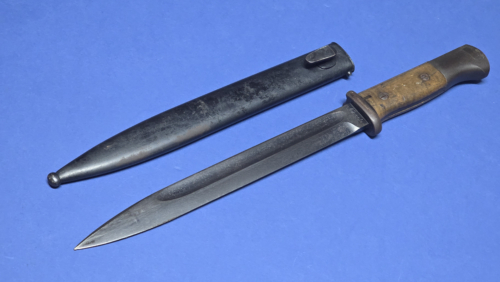
£165.00 SKU: 0377MA World War II German K98 bayonet with wooden grips, dated 1942, manufactured by Carl Eickhorn (code: cof). A solid wartime example, in very nice overall condition.
Blade
The blade is unsharpened and retains all of it's original bluing, finishing in a well-defined pointed tip. The blade remains a very decent example, although, there is light surface spotting present to both sides, which I have shown in the photo's. Even with the surface spotting present, the blade shows no abuse and retains a good profile.One side of the ricasso is stamped with the serial number 8700. The reverse is marked 42 cof, indicating manufacture in 1942 by Carl Eickhorn, one of the predominant blade-making firms in Solingen during this period.
Hilt & Grips
Fitted with light-coloured wooden grip plates in very good condition, secured by the original two screw bolts. The flash guard on this example is in excellent condition with no indentations. The rifle retaining button is fully functional. To the reverse, the hilt carries two clearly stamped Waffenamt inspection marks.Scabbard
The scabbard is undamaged and undented and retains its original throat screw. A Waffenamt inspection stamp is present to the lower ball. On the front face, the scabbard is numbered 1175, confirming that the bayonet and scabbard are not matching.The reverse of the scabbard is marked 41 cof, indicating manufacture in 1941 by Carl Eickhorn. While the serial numbers differ, it is a positive point that both components originate from the same manufacturer.
There is evidence of old black paint present on the scabbard, now largely flaked away, with full original bluing visible beneath. The bayonet fits the scabbard smoothly and correctly, seating fully with a positive snap at the throat.
Overall
A very decent K98 bayonet with attractive wooden grips, a good blade, and an Eickhorn-made scabbard. A clean, honest wartime example that presents well.
We ship to the USA, Europe, and most worldwide destinations.
All items are carefully packed for safe transit. -
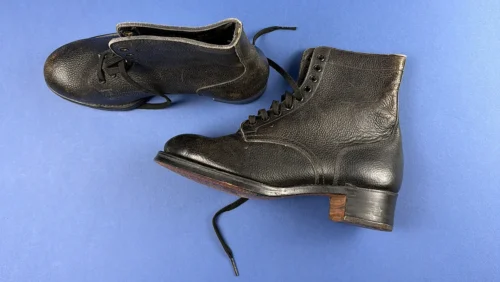
This is an exceptional and original pair of WW2 Women’s Land Army boots, clearly stamped “WLA” to the soles and preserved in unissued condition. A scarce and highly desirable piece of British Home Front material culture, these boots represent the practical working footwear issued to members of the Women’s Land Army during the war. Constructed from heavy pebbled black leather with full lace-up fronts, reinforced heels and studded leather soles complete with hobnails and heel irons, they are a robust agricultural pattern designed for hard rural labour. The soles are crisply stamped with “WLA”, together with size 4½ and factory production codes. Both boots also carry a large “L” stamp, which denotes the manufacturing last (the foot-shaped form used in production), rather than a left/right designation — a typical wartime factory marking and further confirmation of regulation manufacture. Importantly, this pair remains unissued. The soles show no walking wear, the hobnails remain sharp and unworn, and the heel irons are intact. The leather uppers retain excellent structure while remaining impressively supple, with no cracking or dryness — something increasingly uncommon in wartime footwear of this age. Only very minor surface marks consistent with long-term storage are present. Women’s Land Army items sit firmly within the British Home Front collecting field, but surviving footwear — particularly in unissued condition — is significantly harder to find than badges, insignia or paper ephemera. A superb and increasingly scarce example of original WW2 Home Front issue.
-
German World War I Ersatz Bayonet with Scabbard & Frog
£220.00 SKU: 0375MA genuine World War I German ersatz bayonet, displaying the crude, utilitarian construction that defines these wartime-produced pieces. Produced during a period of acute material shortages, this bayonet is a textbook example of the simplified manufacturing methods employed by Germany during the later years of the First World War.
This example presents as an honest, untouched piece, retaining consistent wear and ageing across the bayonet, scabbard, and frog, strongly suggesting they have remained together.
Blade
The blade is bright and clean, forming a good, well-defined tip. It shows evidence of sharpening, as is commonly encountered with service-used examples, but does not appear abused or heavily worn.
A small inspection stamp is present on one side of the blade, with a further inspection mark located on the spine near the crossguard. Overall, the blade remains in very respectable condition for this type.
Hilt & Grips
The hilt construction is characteristically crude, featuring a one-piece metal grip with a simple, functional design. The press-stud locking button is present and functioning correctly.
The crossguard incorporates the standard T-slot mortise intended for the German Gewehr 98 rifle system. The fit between blade and guard is visibly rough, consistent with ersatz manufacture.
A through-hole is present in the grip, and remnants of the original green factory-applied paint can still be observed on the handle.
Scabbard
The bayonet is accompanied by a one-piece all-steel scabbard. The scabbard remains free from major dents or structural damage, retaining its original throat screw.
Surface rust and pitting are present, more pronounced towards the tip, consistent with age and field use. Traces of original green paint are visible on the upper portion of the scabbard beneath the frog, matching the remnants seen on the bayonet grip and reinforcing they have lived together.
Frog
The leather frog appears to be a World War I period German example, secured with aluminium rivets. Some stitching loss is present, with evidence of period repair or restitching in places, and one rivet is missing.
Despite this, the leather remains in decent overall condition and shows wear consistent with prolonged service. While absolute certainty is impossible, the frog shows every indication of having lived with this scabbard.
Overall
A very solid and honest example of a German ersatz bayonet. The fit of the bayonet within the scabbard is excellent, with smooth insertion and withdrawal. Ageing, finish, and wear across all components are consistent, supporting the view that this is a long-assembled set rather than a later marriage.
Historical Note
Ersatz bayonets were produced by Germany during World War I in response to severe shortages of raw materials, skilled labour, and production capacity. Traditional bayonet manufacture was time-consuming and resource-heavy, leading to the adoption of simplified designs using mild steel, reduced machining, and minimal finishing.
These bayonets were produced in numerous patterns and constructions, often lacking maker marks, with functionality prioritised over appearance. Originally finished with painted surfaces rather than bluing, ersatz bayonets represent a stark reflection of wartime necessity and industrial improvisation, making them an important and increasingly appreciated field of collecting today.
We ship to the USA, Europe, and most worldwide destinations.
All items are carefully packed for safe transit. -
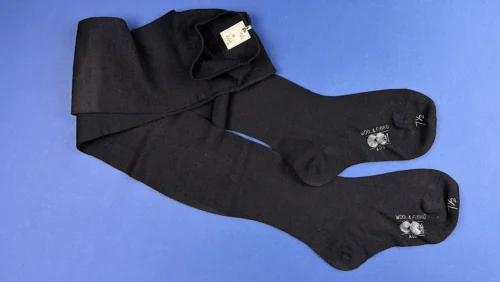
This is an original pair of British CC41 Utility black wool stockings, dating to the early years of WW2 and produced under the government’s wartime Utility Clothing Scheme. Marked with the CC41 symbol printed directly to the sole, these stockings are a genuine civilian Home Front item, made to strict wartime regulations governing materials, manufacture, and cost. Unlike the more commonly encountered later-war hosiery made from rayon or early synthetic “tights-type” materials, wool stockings are firmly associated with the early Utility period, when shortages were most acute and practical warmth took precedence over comfort or fashion. Wool and wool-blend stockings were heavier, harder wearing, and less desirable to wear, which means far fewer pairs were kept unused. As a result, original wool examples are noticeably scarcer today and are generally regarded as more collectible and more valuable than their later synthetic counterparts. The survival of this pair in unworn condition is particularly noteworthy. The stockings remain clipped together with their original small metal retail clip and card, a feature rarely seen and strongly indicative of unused, shop-stock condition. Worn examples often show stretching, thinning, or repairs, making clean, unused wool pairs especially difficult to source. As a Home Front object, these stockings are a strong representation of early-war civilian austerity, reflecting both the material shortages and the everyday realities faced by British women during the first half of the conflict. They display well, date securely to the Utility period, and sit comfortably within a serious WW2 civilian clothing collection. It’s not often you can look at a piece and claim mint condition, and while time will always be against you, this pair is as good as it gets condition wise. The photos speak for themselves and the only ‘damage’ I can see anywhere on them is on the metal retail clip. It has some tarnishing but even then, it’s very mild. Because these are wool stockings, please do keep them sealed (we will provide a sealed bag free of charge) and away from moths!
-
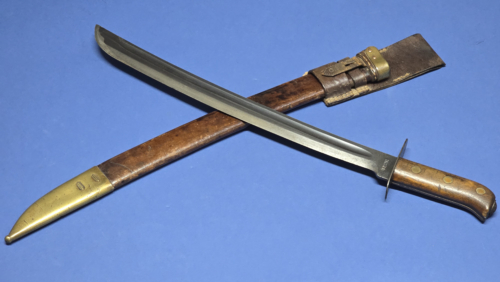
Dutch Military Klewang Sword by HEMBRUG
£295.00 SKU: 0374MA highly attractive Dutch military klewang sword featuring a curved, blued blade with matching leather scabbard and frog. This example shows honest service wear throughout while retaining strong original features, including bluing to the blade and well-preserved leather components. A visually striking piece of European military edged weaponry.
Blade
The curved blade retains a good amount of its original blued finish and forms into a pleasing, well-shaped tip. The blade shows evidence of period sharpening, which is commonly encountered on these swords and is visible in the photographs. On one side of the ricasso the maker’s mark HEMBRUG is present. On the reverse, visible on closer inspection, is a Dutch acceptance mark consisting of a crown over W, indicating acceptance during the reign of Queen Wilhelmina (1890–1948).Hilt & Grips
The hilt is fitted with a thin, flat crossguard and wooden grip scales secured by three original brass rivets, which sit flush to the grips. A faint circled W inspection mark is present on the reverse of the grip near the crossguard. The wooden grips show a number of small indentations and edge chips, all consistent with age and service use, and clearly shown in the photographs. A securing screw is present at the top of the hilt.Scabbard
The scabbard is of brown leather construction and follows the curve of the blade very well. It is fitted with brass mounts, including a lower brass fitting secured by two original staples and a brass throat piece held by two rivets. The rear stitching is fully intact and tight. The leather displays a lovely aged patina with a smooth, natural sheen. The blade fits the scabbard extremely well.Overall
A very attractive and well-matched example, retaining its original character throughout. The combination of blued blade, marked hilt, and excellent leatherwork makes this a particularly appealing piece of Dutch militaria. While showing honest wear, it remains structurally sound and displays beautifully.Historical Note
This klewang was manufactured at the Dutch state arms factory HEMBRUG and bears Dutch acceptance marks associated with service during the reign of Queen Wilhelmina (1890–1948). It remains in its original Dutch service configuration and should not be confused with later American-made or Japanese-modified examples. Some secondary control marks remain undocumented and are therefore left unattributed.
We ship to the USA, Europe, and most worldwide destinations.
All items are carefully packed for safe transit. -
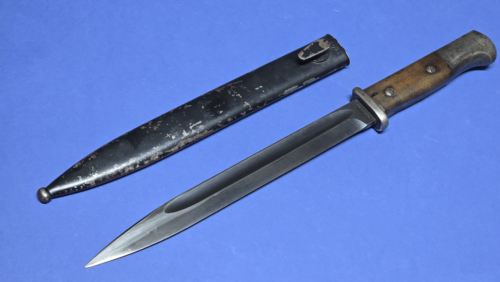
WW2 German K98 Bayonet – Near-Mint Blade – 1938 – Paul Weyersberg
£160.00 SKU: 0372MA German World War II K98 bayonet dated 1938, manufactured by Paul Weyersberg, offered here in very good overall condition and featuring a particularly strong, near-mint blade.
Blade
The blade on this bayonet rates as near-mint. It remains unsharpened and retains approximately 95% of it's original bluing still present. The finish is smooth and even, with a well-defined pointed, undamaged tip. The ricasso is stamped with serial number 7993 on one side, with the maker Paul Weyersberg on the reverse. Paul Weyersberg was a prolific Third Reich period manufacturer, well regarded for producing bayonets of consistently high quality.
The spine of the blade is stamped 38, confirming the production date as 1938.Hilt & Grips
The hilt is fitted with its original two wooden grips, showing expected surface wear but remaining undamaged, with it's original two screw bolts.
The flash guard is intact and undamaged and bears a clear Waffenamt inspection stamp. The rifle retaining button functions correctly and is also Waffenamt marked, with a further two Waffenamt inspection stamps present on the hilt.Scabbard
The scabbard has been painted black at some stage, a feature commonly encountered on wartime bayonets. Similar blackened finishes are seen on examples from both the Second and First World Wars. It is not possible to determine exactly when this finish was applied, but it has the appearance of an old, period-used coating.
The scabbard body is free from dents or damage and retains a Waffenamt stamp on the lower ball finial. The reverse is marked 41, indicating 1941, along with asw, the code for E. & F. Hörster.
The scabbard throat screw is missing, however the blade inserts smoothly, with a positive snap.Overall
A well-presented German K98 bayonet with an excellent blade and honest wartime character. While not a matching set, it offers strong collector appeal due to its near-mint blade condition and clear, correct markings.
Historical Note
The K98 bayonet was introduced alongside the Karabiner 98k and served as the standard German bayonet throughout the Second World War. Produced by numerous manufacturers across the Reich, these bayonets were used on all fronts and saw extensive service, making original, unmolested examples increasingly desirable to collectors today.
We ship to the USA, Europe, and most worldwide destinations.
All items are carefully packed for safe transit.