
Welcome to The Vault Militaria
Welcome to
The Vault Militaria
Authentic pieces. Timeless stories. Exceptional service.
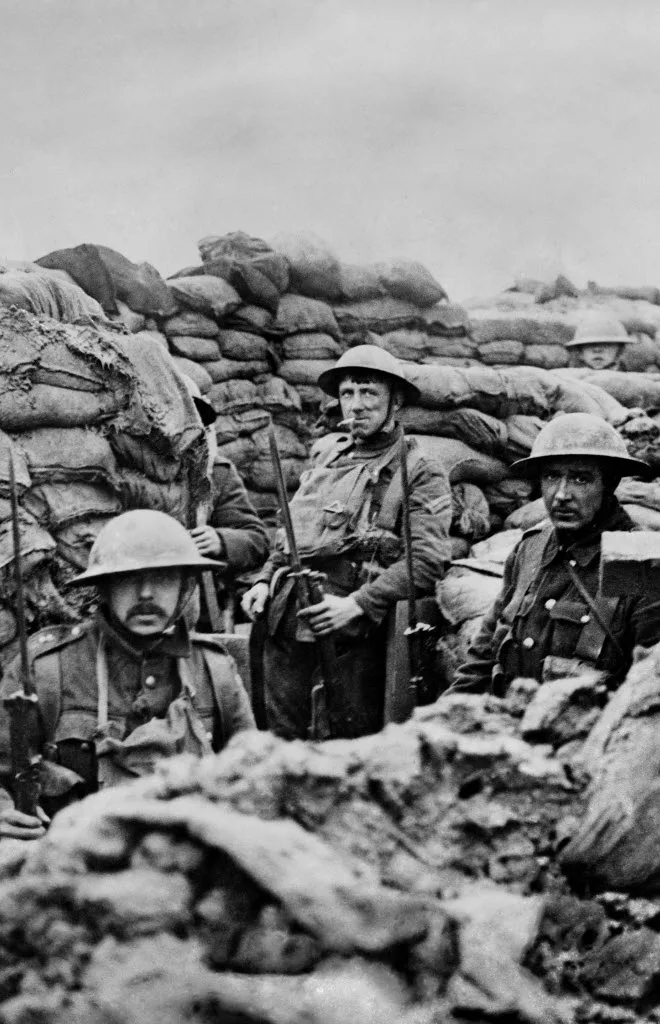
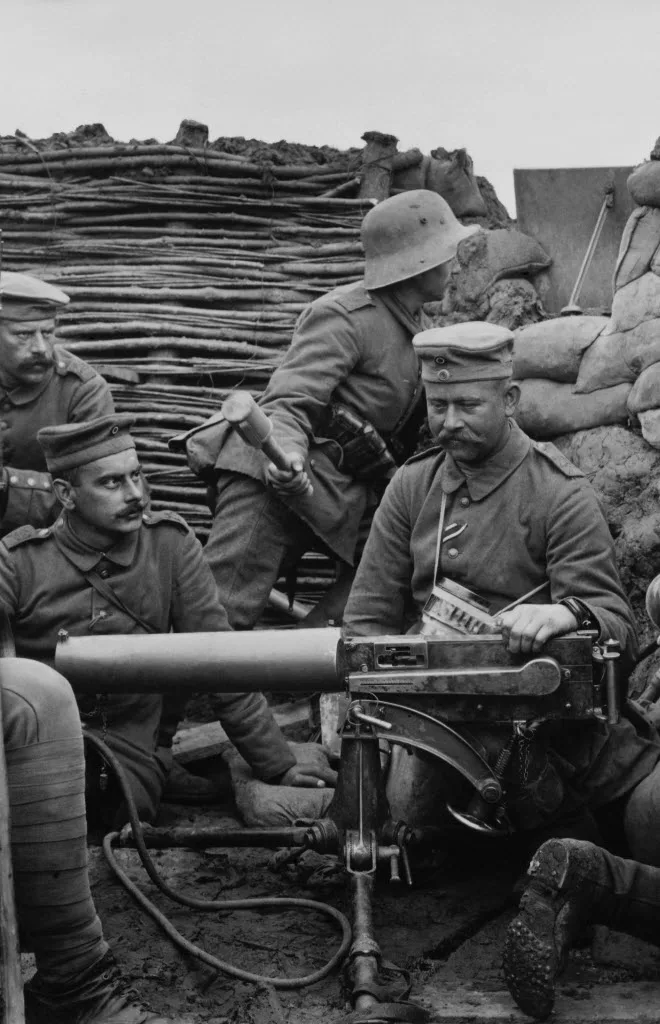
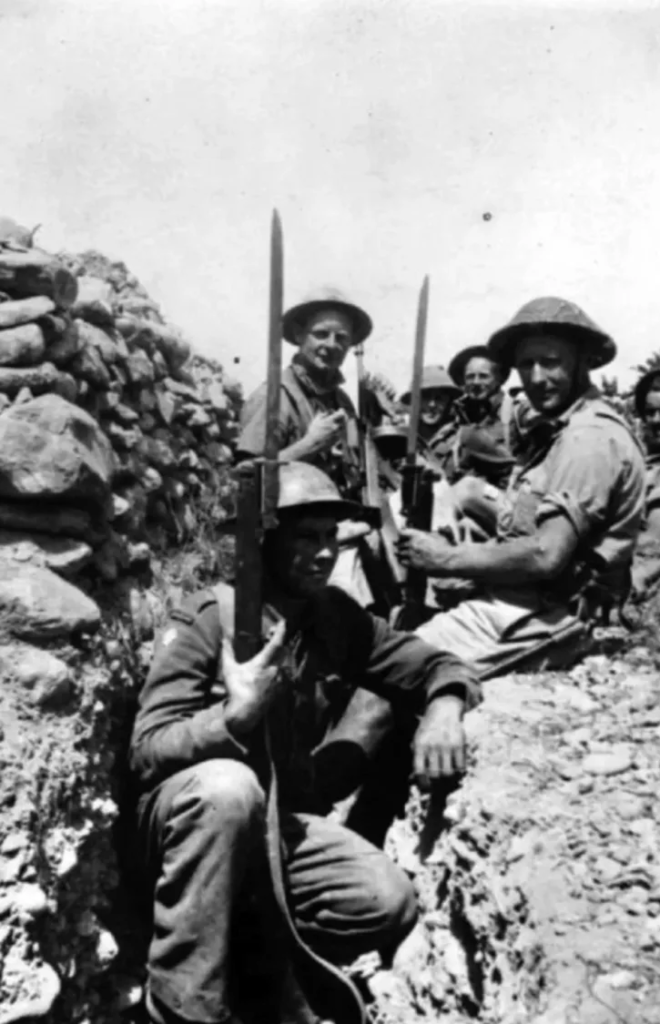
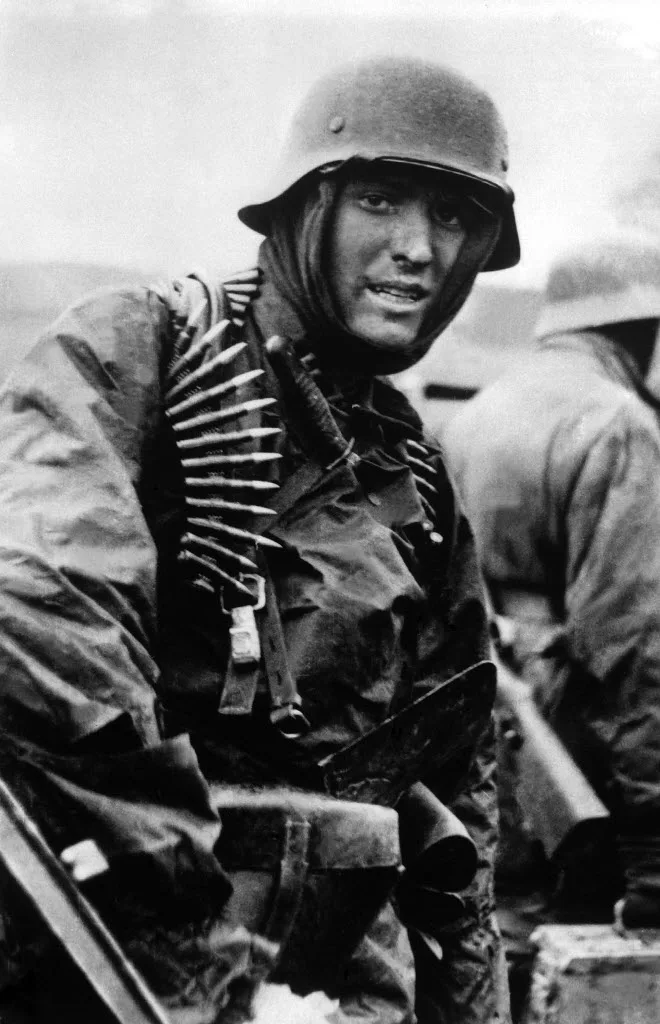
The Vault Militaria is the UK’s newest destination for authentic wartime memorabilia and collectables. Specialising in rare and hard-to-find items from World War I and World War II, we offer history enthusiasts and collectors a carefully curated selection of genuine artefacts.

new items every week
Rare finds
Our team of experts meticulously sources, authenticates, and catalogues each piece, ensuring that you receive only the finest quality items with verified provenance. And we’re adding more and more items on a regular basis.
From battle-worn uniforms and medals to vintage weapons, field equipment, and personal effects, The Vault Militaria brings you closer to the tangible remnants of wartime history.
knowledge & experience
We buy & sell
The founders of The Vault Militaria bring over 50 years of combined collecting experience to the table. They have a pair of keen eyes for the unusual together with an extensive knowledge of wartime collectables to ensure that every item offered is both authentic and exceptional.
With decades spent honing their expertise, they’ve developed an unparalleled ability to source and validate rare military artifacts, making The Vault Militaria a trusted name in the field.
Contact Mark on 07471 058445 or Andrew on 07944 609319
Contact Mark on 07471 058445
or Andrew on 07944 609319
Browse our latest items
-
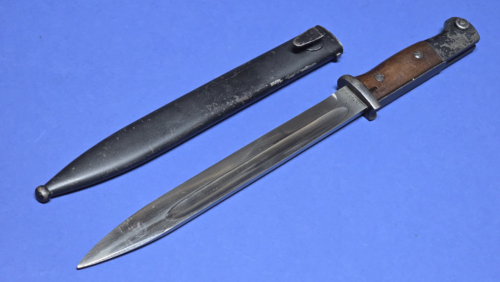
WW2 German K98 Bayonet – Carl Eickhorn – 1941
£145.00 SKU: 0365MA genuine WWII German K98 bayonet offering an honest, service-used appearance. This example is not a high-end near mint example, but still a decent bayonet suited to collectors who want an authentic wartime example without paying for premium condition. Both the hilt and scabbard have been painted black, a finish we see sometimes encounter on wartime K98 bayonets. This is generally associated with late war manufacture or refurbishment when blued finishes were no longer always applied.
Hilt & Grips
Fitted with original wooden grips secured by two correct screw bolts, both present and undisturbed. One grip panel remains in better condition than the other, with the opposite side showing light scratches and small dents consistent with service wear. The flash guard is intact and undamaged.
The rifle retaining button functions correctly and carries a Waffenamt stamp. Two further Waffenamt inspection stamps are present on the hilt. The hilt retains approximately 50% of its original black paint.Blade
The blade remains straight and clean with no damage. Marked on one side with "cof" identifying Carl Eichhorn as the maker, the date 41, and serial number 8510 on the reverse.
This bayonet is not matching numbers.
The blade tip is intact but not particularly sharp. There is no obvious evidence of heavy sharpening; if sharpened, it was light and is difficult to detect.Scabbard
The steel scabbard is free from dents or structural damage. It retains approximately 90% of its original black paint, closely matching the hilt finish, indicating they were painted at the same time.
Marked with FNJ and the date 42, identifying Alexander Koppel as the maker. A Waffenamt stamp is present on the lower ball, and the throat screw remains intact.
Serial number 5424 is stamped on the scabbard.
The blade fits snugly and correctly within the scabbard.Overall
An honest, service-used WWII K98 bayonet, in good overall condition.
Historical Note
The K98 bayonet was the standard edged weapon of the German infantry. Produced by numerous Solingen makers, including Carl Eichhorn and Alexander Koppel. It remained in service throughout the war, with finishes and production methods evolving as wartime condition changed.
We ship to the USA, Europe, and most worldwide destinations.
All items are carefully packed for safe transit. -
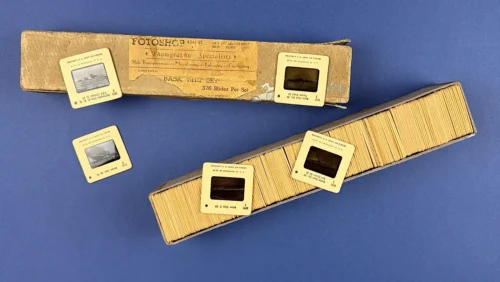
WW2-Era “Basic Ship Set” Photographic Slides (186) – Fotoshop, New York
£65.00 SKU: 0153AThis is an original WW2-era professional photographic slide group, forming part of a “Basic Ship Set” produced by Fotoshop, a commercial photographic services firm based in New York City. The surviving box contains 186 individually mounted photographic slides, representing a complete and intentionally filled section of a larger reference set originally catalogued as 376 slides per set. Slide sets of this type were created for industrial, technical, and instructional purposes, rather than casual photography. Firms such as Fotoshop specialised in producing photographic transparencies, duplication, and microfilming services for commercial clients, shipyards, engineers, and institutions. During the WW2 period, photography played a key role in documenting civilian and industrial maritime activity, including ship construction, modification, inspection, and training reference material. The slides appear uniform in format and presentation, suggesting they were produced and assembled as a cohesive working group rather than an assorted collection. The box is filled to capacity, indicating that the 186 slides it contains were intended as a complete unit, likely representing one section of a multi-box set. Condition-wise, the box shows clear signs of age and use, including wear and what appear to be period attempts at repair. One end of the lid is missing, and the label has suffered a tear, likely removing information such as a box or set designation. The best way to assess the overall condition is by examining the photographs provided. Importantly, all 186 slides are present and accounted for, having been individually counted, and their individual condition is actually very good. The box tells a story of use, while the slides themselves remain the primary conveyors of information. A scarce and evocative example of WW2-era professional photographic documentation, with strong appeal to collectors of American Home Front material, industrial history, and photographic archives. -
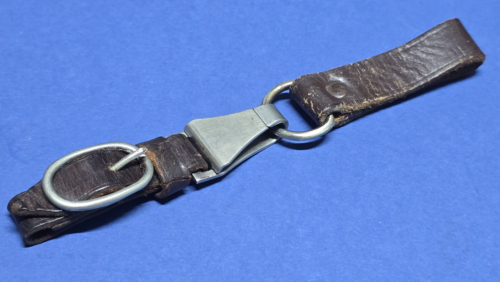
German SA Dagger Two-Piece Hanger – Early Nickle Fittings
£160.00 SKU: 0364MOriginal German SA dagger two-piece hanger of early pre-war manufacture, dating to the early to mid-1930s. This example features correct nickel fittings throughout, clearly identifying it as an early quality piece. A strong, honest example that would pair very well with a good early SA dagger.
Hanger
Correct two-piece configuration with original nickel oval buckle and nickel clip, both showing a consistent, even patina. The clip functions with a strong spring action.
Leather
Brown leather remains in very good overall condition showing only honest age and service wear. No rips, tears, or repairs noted. The leather remains strong and supple throughout.
Belt Loop
Complete with the correct nickel D-ring belt loop. The leather here is excellent — strong, supple, and well-preserved, with no cracking or weakness.
Overall
A well-preserved early SA two-piece hanger with desirable nickel fittings, showing genuine period wear but remaining structurally sound. An honest, attractive example suitable for upgrading or completing an early SA dagger.
Historical Note
Early SA dagger hangers with nickel fittings were produced prior to wartime economy measures and reflect higher-quality early construction.
We ship to the USA, Europe, and most worldwide destinations.
All items are carefully packed for safe transit.
-
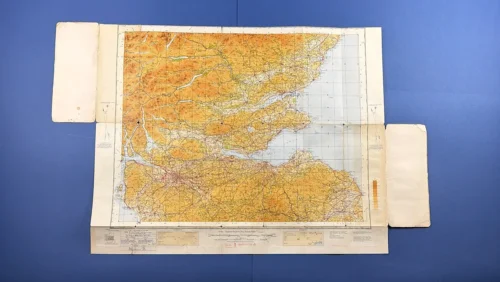
This is an original WW2 Ordnance Survey Quarter-Inch Map covering The Forth, Clyde and Tay, issued as a War Office Edition and published as part of the Fourth Edition series. Quarter-inch maps were produced at a scale of one inch to four miles and were widely used during the war for navigation, planning, and operational reference. War Office Edition maps were produced specifically for official wartime use, reflecting the urgent need for accurate mapping during the early years of WW2. The Forth, Clyde and Tay region was of major strategic importance, encompassing key industrial centres, ports, naval facilities, and transport routes central to Britain’s Home Front infrastructure. The map retains its original illustrated cover and though some or the corners have rounded. As you can see from the photos, there are some holes where the map has been folded and the cover has some light staining too. However, the map itself is displayed nice and clearly and while it’s seen use the cover remains intact. When fully unfolded, this map measures 28 x 34 inches.
-
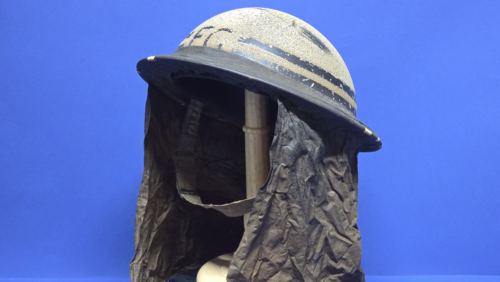
WW2 British Fire Guard Mk II Helmet – 1939 Liner – First Pattern Gas Curtain
£295.00 SKU: 0361MThis helmet is the actual illustrated example shown in Helmets of the Home Front II, page 163 by Adrian and George Blake, where it is identified as a two-banded Fire Guard Sector Captain (or Area Instructor) helmet fitted with a first pattern gas curtain. Being a reference-published example from one of the standard works on the subject.
A scarce and fully original British WW2 Fire Guard Mk II steel helmet, retaining its original early-war liner and first pattern anti-gas curtain. Helmets surviving with their gas curtains intact are uncommon, as these were frequently damaged or removed during service.
Shell
The steel shell retains its original factory-applied finish, showing honest service wear throughout. The twin black bands and FG lettering are period-applied, with natural paint loss consistent with age and handling. There is no evidence of later repainting or restoration, and the overall appearance remains untouched. I was unable to find a date on the inside shell. The curtain band remains in place and has not been removed, as I am reluctant to disturb original items.
Liner
Liner is fully intact and displays the early ovel pad, and stamped Helmets Ltd and dated 1939, confirming early-war production. The liner is complete but shows age-related wear, including stiffening to the pad, which is entirely typical for original liners of this period.
Gas Curtain
Retaining a first pattern anti-gas curtain constructed from coarse brown fabric, as issued during the early war years when gas attack was still considered a serious concern. The curtain shows period wear and includes a few small splits to the rear, which is expected, as these curtains were fragile and rarely survived intact. Finding an example still retaining its gas curtain is increasingly uncommon.
A faint ink stamp is present on the curtain, though it is indistinct and cannot be positively identified. No attempt has been made to interpret or enhance this marking.
Overall
A completely original early-war Fire Guard helmet with strong character and excellent display presence. While not wearable due to liner condition, it remains an honest, untouched example retaining all its key components.
Historical Note
The Fire Guard was formed in 1940 to counter the widespread risk posed by incendiary bombing during the Blitz. Fire Guards were civilian volunteers responsible for identifying and extinguishing fires caused by incendiary devices, often working under extremely hazardous conditions during air raids.
Early Fire Guard helmets frequently followed Civil Defence patterns and were often fitted with anti-gas curtains, despite these later proving ineffective. As discussed in Helmets of the Home Front II, many such items were nonetheless retained in service, making surviving examples with original curtains particularly desirable today. The marking style seen on this helmet is illustrated in the same reference work, providing useful contextual support.
We sell to the USA, Europe, and most worldwide destinations.
All items are securely packed for safe transit.
-
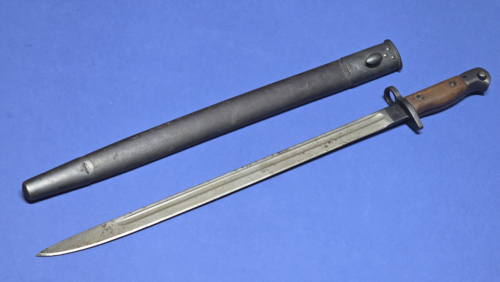
A tidy and honest example of the iconic WW1 British Pattern 1907 Lee-Enfield bayonet, manufactured during the final year of the First World War and later retained for inter-war service. This example remains complete with its correct leather scabbard and presents as a well-preserved service bayonet showing genuine age but no abuse.
Blade
The blade retains its factory sharpening, with no evidence of post-war over-sharpening or grinding. It terminates in a clean, fine point and remains straight. Condition is decent overall, with some staining present in places, consistent with age.
The front ricasso is crisply stamped with the crowned 1907 pattern designation and the maker’s name Sanderson, along with the date 4 / 18, indicating manufacture in April 1918.
The reverse ricasso displays the Broad Arrow, inspection marks, and the date 27, which is widely accepted as an inter-war re-inspection or reissue mark, showing the bayonet was retained for further service.
Hilt & Grips
The wooden grips are in excellent condition and are free from cracks or damage. They retain their correct original screw bolts and fit tightly to the tang.
The rifle retaining button functions correctly. Bluing to the crossguard, tang, and pommel remains very strong, further supporting that this bayonet has seen careful service.
Scabbard
The bayonet is accompanied by its original leather scabbard. Both the upper mount and lower chape retain strong original bluing, which matches the hilt fittings very well and strongly suggests the bayonet and scabbard have been together for a long period of time.
Inspection stamps are present to both metal fittings. The leather body is in excellent condition, with no dents, rips, or tears, and all stitching remains tight and intact. Some markings are visible to the upper leather, including a W and Broad Arrow, though they are faint with age.
The blade fits the scabbard perfectly, seating snugly and correctly.
Overall
A very tidy and well-preserved Pattern 1907 bayonet, offering strong markings, excellent grips, good blade condition, and a matching scabbard. A solid, honest example with clear First World War manufacture and documented inter-war service life.
Historical Note
The Pattern 1907 bayonet was adopted by the British Army for use with the Short Magazine Lee-Enfield rifle and became one of the most recognisable bayonets of the First World War. Early examples featured a hooked quillon, intended to catch an opponent’s blade, but this feature was officially discontinued by order in 1913, with many quillons removed during later wartime and post-war inspections.
Bayonets produced in 1918, such as this example, represent late-war manufacture, and many were retained, inspected, and reissued during the inter-war period, as indicated by later inspection dates such as 1927.
We sell to the USA, Europe, and most worldwide destinations.
All items are securely packed for safe transit.
-
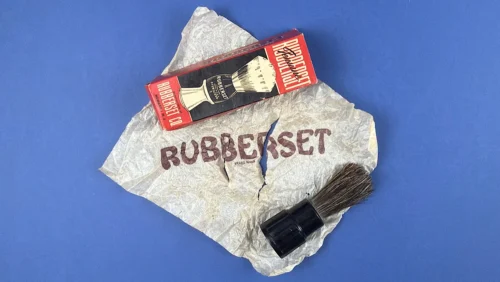
Original WW2 American Home Front Rubberset Shaving Brush with Box
£28.00 SKU: 0151AThis is an original WW2-era American civilian shaving brush produced by Rubberset, one of the leading United States manufacturers of grooming and barber equipment during the early to mid-20th century. Supplied here with its original retail box, this example represents a common but essential item of everyday life on the American Home Front during the war years. The brush features a hard rubber handle, a material widely promoted during the 1930s and 1940s for its durability and hygienic properties. Rubberset marketed this construction as permanently securing each bristle within the handle, making it suitable for repeated daily use in domestic settings. The knot is composed of natural bristle, typical of civilian shaving brushes of the period. During WW2, shaving was not merely cosmetic but practical, particularly due to the widespread use of gas masks which required a clean-shaven face to achieve an effective seal. Civilian grooming items such as this were therefore part of everyday wartime routine, both in the home and in professional barber environments, making them a small but telling part of Home Front life. While not a military-issued item, this shaving brush is a genuine wartime civilian object and serves as a tangible example of American domestic life during WW2. Items of this type are increasingly sought after by collectors interested in the material culture of the Home Front rather than frontline equipment. Condition wise, the original box retains its lid tabs, however these have become detached. The brush is accompanied by its original branded paper packaging, which shows some age-related wear including small holes (see photos). The brush itself has clearly been used at some point, though this is difficult to fully convey in photographs. The bristles feel noticeably stiff, likely as a result of age. The hard rubber handle remains free from cracks and is clearly branded on the base. -
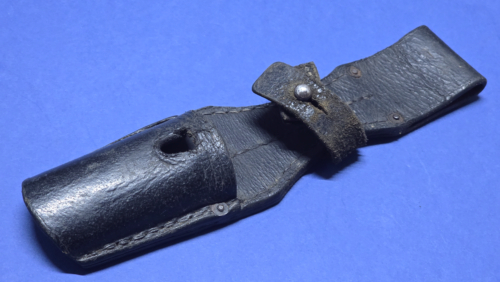
WW2 German K98 Bayonet Frog – Late War – Good Condition
£85.00 SKU: 0359MA late World War II German K98 bayonet frog, exhibiting the materials associated with the latter stages of the war. The frog remains structurally excellent, and is a strong, honest example that displays well and fits perfectly with a late-war K98 bayonet.
Construction & Leather
Manufactured using a more economical grade of leather, consistent with known late-war production when material shortages were widespread. The leather shows expected age, but remains strong, and has kept a good shape.Stitching & Rivets
All original stitching remains present, tight, and secure throughout. The original four rivets are correctly placed, with no signs of replacement or tampering.Markings
Faint impressions are present on the reverse. Under strong light, there is the possibility of a 1945 date, however this is not clear enough to state definitively and is mentioned only for transparency.Overall
A very solid and attractive late-war K98 frog, showing honest wartime manufacture and surviving in excellent structural condition. An ideal pairing for a late-production K98 bayonet.Historical Note
Late-war K98 bayonet frogs of this type are illustrated and discussed in A Collector’s Guide to German Bayonet Belt Frogs, 1825–1945 by Roy Williams, where simplified leather construction is documented as a response to material shortages during the closing phase of the war.
We sell to the USA, Europe, and most worldwide destinations.
All items are securely packed for safe transit.